


What happens if you never blink? Discover how blinking protects your eyes, prevents vision loss, and why losing this reflex could become a medical nightmare.
Welcome to the longest staring contest of your life. Right now, you are reading this with your eyes open, and while your focus feels intentional, your body is already working in the background. Without realizing it, you have blinked because this tiny automatic reflex is handled quietly by your nervous system, the same system that keeps your body running even when you sleep.
But what if that stopped?
Imagine you suddenly could not blink at all: not in harsh sunlight, not in a dry breeze, and not even when your eyes began to burn. Within seconds, the surface of your eyes starts losing its protective moisture, and what feels like a minor inconvenience begins revealing itself as something far more serious.
Your eyes would protest almost immediately, because blinking is not a habit you can opt out of. It is a survival reflex. The moment it disappears, the system built to protect your vision begins failing quietly but quickly.
Why Do We Blink in the First Place?

Blinking is not a random habit. This reflex exists for a reason, and understanding what it actually does makes the idea of losing it far less abstract. On average, you blink 15 to 20 times per minute during waking hours, roughly 14,000 to 19,000 blinks across a single day. Your eyelids handle this nonstop workload, making it one of the most demanding and thankless jobs in your body.
With every blink, a thin layer of tears spreads across your eyes to wash away dust, bacteria, and microscopic debris while smoothing the surface. That smoothness allows light to focus properly, which is why your vision stays sharp instead of blurred.
The corneas raise the stakes further. They contain no blood vessels, so blinking becomes their only reliable way to receive oxygen and nutrients through tears. A 2025 study published in Scientific Reports found that reducing blink frequency significantly worsened tear-film stability in young adults with dry eye symptoms. Remove blinking entirely, and the system does not just weaken. It fails completely.
When blinking stops, you are not just skipping a habit. You are shutting down the system that keeps your eyes functional, and the consequences follow quickly.
Immediate Effects: The First Days
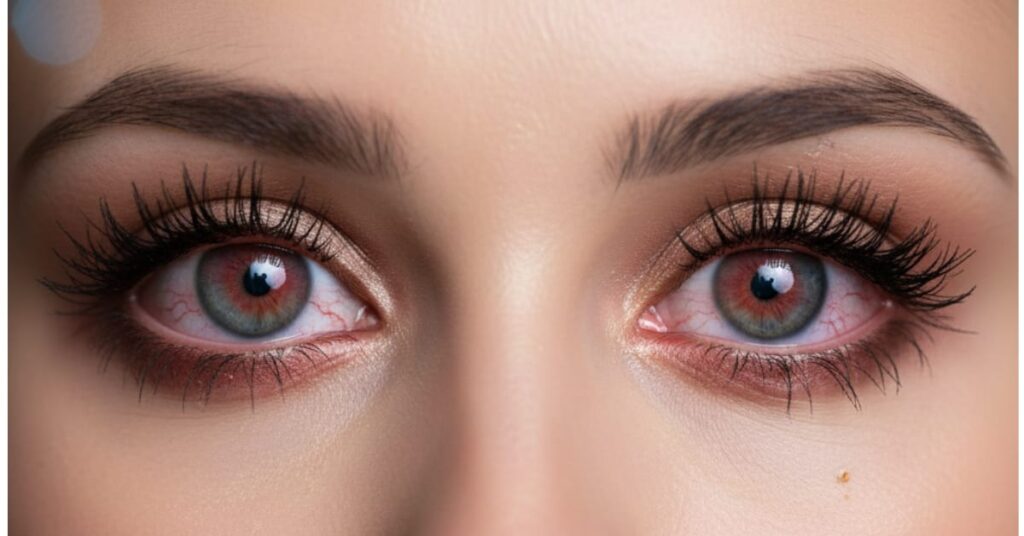
Without blinking, the consequences arrive faster than you might expect. Almost immediately, your brain begins firing urgent signals to blink, but your eyelids remain frozen open, allowing the thin tear film that normally protects your eyes to evaporate within minutes. As that moisture vanishes, dryness sets in, and irritation follows close behind.
By the second or third day, the damage becomes visible. Without blinking to clear the surface or shield your eyes from the environment, dust, airflow, and light exposure begin to take their toll. Your eyes grow red and swollen, and focusing becomes harder with each passing hour as the visual system starts to falter under constant exposure.
One Week Without Blinking
By midweek, what began as irritation shifts into distortion. As the corneas dry out, their smooth surface breaks down, causing light to scatter instead of focusing properly. The world around you starts looking blurred and unstable. The discomfort deepens into a burning, gritty sensation. As the irritation becomes impossible to ignore, the constant stress begins resembling the escalating biological alarm signals that occur during a panic attack. Somewhere in that discomfort, blinking starts to feel like the greatest luxury you have ever denied yourself.
By the end of the week, the situation crosses into systemic failure. With no blinking to protect against wind or ultraviolet exposure, your eyes remain inflamed, oxygen-starved, and painfully sensitive to light. According to the American Academy of Ophthalmology, this is the stage where severe dry eye syndrome sets in, bringing persistent pain and functional vision loss along with it. Even simple tasks, like reading these words, become difficult to sustain.
And this is only the first week. If blinking still does not return, the damage continues to compound.
One Month Without Blinking
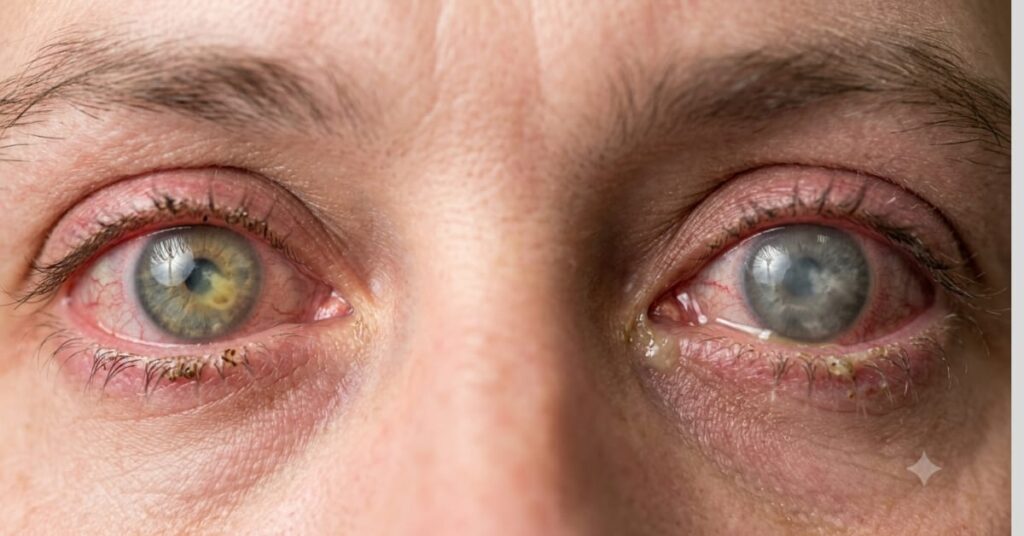
If surviving a week without blinking already sounds brutal, pushing it to a full month becomes genuinely dangerous. By this stage, constant dryness and exposure begin eating away at your corneas, leading to corneal ulcers, painful open sores on the corneal surface that leave the eye highly vulnerable to infection. This is no longer discomfort. It is structural damage.
As these ulcers develop, they become easy entry points for bacteria. Without the constant flushing action of a blink, infections take hold quickly, turning tissue that was once self-cleaning and resilient into a breeding ground for disease.
At this point, vision loss stops being a distant possibility and becomes a very real risk. Even if you could somehow endure the pain, which is unlikely, healing still cannot happen while the eyes remain exposed and deprived of moisture and oxygen. The damage compounds day after day, without pause.
Each blink you never take adds another layer of harm, slowly transforming irritation into lasting injury. By now, the message is impossible to ignore: blinking was never a minor reflex. It was your eyes’ frontline defense, quietly preventing exactly this kind of breakdown.
And if blinking still does not return, the consequences do not stay confined to your eyes for long.
Long-Term Effects
Over the long term, never blinking leads to permanent corneal scarring, repeated infections, and eventually blindness. By this stage, the damage is irreversible; your eyes are not machines but living tissue that depends on constant care to survive.
When this reflex disappears, the system does not collapse instantly. Instead, it steadily weakens, gradually losing its ability to protect and repair itself.
So if you were hoping that never blinking might unlock superhuman focus or a productivity boost, biology answers that question quickly. The same reflex you barely notice is the reason your vision remains clear, stable, and functional for decades.
And once that reflex is gone, there is no upgrade waiting on the other side, only limits you cannot undo.
Reality Check: Is This Even Possible?

Take a breath; this nightmare scenario cannot happen in real life. Blinking is controlled by powerful reflexes deep within your brain that override conscious effort long before your eyes are harmed.
Even those who train to delay blinking face strict biological limits. For example, Anand Haridas from Kerala, India, set a verified record by keeping his eyes open for one hour and thirty-one minutes through years of Trataka practice. Even in this extreme case, blinking was delayed, not eliminated.
While certain medical conditions can disrupt this reflex, stopping it completely is practically impossible. Your nervous system intervenes the moment strain is detected, much like it does when regulating your sense of time, stepping in before you are even aware something needs correcting. That is why your eyes survive thousands of staring moments every day.
Why the Quietest Reflex Does the Loudest Work
Blinking is one of the quietest life-saving actions your body performs. It does not announce itself or demand appreciation; instead, it works silently, thousands of times a day, protecting your vision without ever asking for credit.
So the next time you blink, pause for just a moment and notice what that tiny movement is actually doing. In that split second, it is restoring one of your most valuable senses without you having to think about it at all. That is not a small thing. It is your body quietly keeping you whole.
Sources
The following sources were consulted while writing “What Happens If You Never Blink Again?“
- Blinking and Eye Health – How to Tell You’re Not Blinking Enough
https://www.brimhalleyecenter.com/general/blinking-and-eye-health/#:~:text=If%20you%20stop%20blinking%2C%20your,that%20are%20tired%20and%20dry. - Blinking of Eye: Functions, Disorders, and Treatment
https://www.doctutorials.com/guide/blinking-of-eye - What Is Dry Eye? Symptoms, Causes and Treatment
https://www.aao.org/eye-health/diseases/what-is-dry-eye - Relationship between Corneal Sensation, Blinking, and Tear Film Quality
https://pubmed.ncbi.nlm.nih.gov/27104591/ - The images in this blog are created with the support of an AI tool and reviewed by the author.





Comments