


What if you suddenly stopped feeling pain? Discover the terrifying medical reality of living without your body’s alarm system and why “invincible” is actually a trap.
You’re boiling water for coffee while scrolling through your phone before your morning officially starts. The water hits a rolling boil, you reach for the handle, and a few drops splash onto the back of your hand.
You wait for the sting. It doesn’t come.
Instead, a small blister rises silently on your skin, forming in real time while you stare at it in disbelief. No flinch. No yelp. Nothing. Just a quiet, painless little dome where boiling water has already damaged your skin.
At first, that might sound like a superpower. After all, who would not want a life without pain?
So what happens to a house when its sirens stop working while the fire continues to burn inside?
Why Pain Is Way Essential for Survival
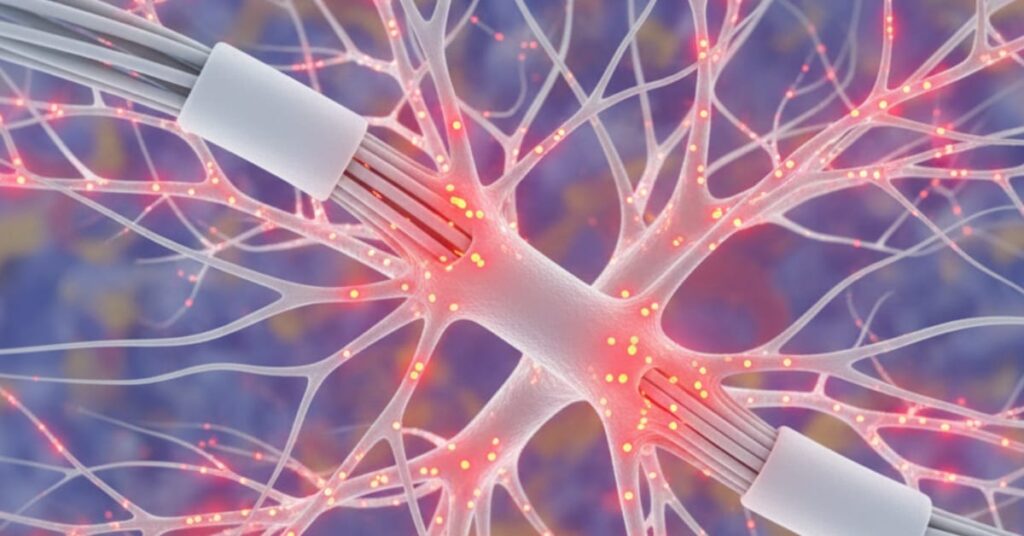
You probably hate pain, and that makes sense because no one wakes up hoping for a headache or a stubbed toe. Still, beneath the discomfort, pain serves a purpose far more important than most of us realize. Your pain receptors, or nociceptors, act as sentinels, patrolling your nervous system to flag danger the moment it strikes.
These signals force you to pull away from a flame, rest an injured joint, or stop walking on a fractured bone before the damage becomes even worse. Without them, you would move through the world oblivious to life-altering injuries. At first, it feels like a superpower. Very quickly, it becomes a liability.
Here’s where it gets uncomfortably real: Congenital insensitivity to pain is a rare condition in which people literally cannot feel pain. While it may seem fascinating, it is deeply unsettling because the body loses its most reliable warning signal. Research shows children with CIP often suffer serious injuries early in life. They are not being reckless. They simply cannot tell when to stop, slow down, or protect themselves before small problems become major ones.
Without pain saying “enough,” damage continues silently. By the time a problem becomes visible, the consequences may already be affecting how you move, work, and interact with the people around you.
Hours Later: Confidence Kicks In

As the hours pass, confidence quietly takes the place of caution. The small blister on your hand remains painless, and that silence starts feeling reassuring rather than alarming. You pick up a hot mug without hesitation, brush off a scraped knuckle, and begin assuming that if nothing hurts, nothing is wrong.
That is where the real danger begins. With the feedback loop broken, your internal warning system goes offline, leaving you unaware of the damage quietly accumulating beneath the surface. It feels a little like the deceptive calm that can precede a panic attack, when everything seems manageable right before hidden biological processes reveal the real problem. The longer that silence continues, the easier it becomes to mistake vulnerability for safety.
One Day Later: When Healing Slows Down

A full day passes, and although the blister on your hand has not hurt once, something feels subtly off. At first, you are just more tired than usual, dragging yourself through the day without a clear reason, and you brush it aside by telling yourself you have simply been productive. After all, you pushed through an extra thirty minutes on the treadmill yesterday, and there is still no soreness today, no stiffness, nothing to suggest you overdid it.
Normally, pain would nudge you to rest. Instead, silence offers no guidance, allowing you to move forward unchecked while inflammation rises and stressed tissues struggle to repair microscopic tears. Fatigue settles in quietly, much like the confusion that develops when your brain loses its sense of time, and without a signal to ease up, you do not realize you are running on empty.
One Week Later: The Illusion Starts Cracking

By the end of the week, the cracks begin to show. The blister on your hand never properly healed and has quietly turned into something closer to an open sore. Bruises and swelling appear in unexpected places, alongside mechanical errors like a bitten tongue or ground teeth that a sharp sting would usually prevent.
Simple movements feel unreliable. Your immune system works constantly to repair accumulating damage, but the injuries keep coming faster than your body can recover from them. Much like what happens when your immune system turns against your own body, the problem is no longer a single injury but a growing cycle of damage that becomes harder to contain.
The illusion finally cracks for good. What felt like a superpower a week ago now reveals the hidden cost it has been quietly tracking the whole time.
One Month Later: The Hidden Damage Grows

By the time a full month passes, you might still look perfectly fine on the outside. The blister on your hand has now turned into an infected sore, and you only notice it because of a faint smell rather than any pain or warning. Beneath the surface, however, the strain is no longer subtle. Sprains you never noticed remain unaddressed, minor infections spread, and wounds deepen simply because nothing ever forces you to stop.
This is the clinical reality of CIP: without the stop command of pain, damage compounds rather than stabilizes.
Everyday tasks quietly become riskier, medical visits become more frequent, and what once felt like harmless injury starts carrying real consequences for your daily functioning.
And by now, the consequences are no longer limited to healing. They are beginning to change how you move, work, and navigate daily life, setting the stage for problems that stretch far beyond a single month.
Six Months Later: When Advantages Become Threats
Six months in, the absence of pain has reshaped your judgment more than you realize. The sore on your hand has long healed into scar tissue, just one of several now scattered across a body that never once asked you to slow down. You lift heavier and push harder, unaware that your muscles are weakening and your joints are deteriorating without proper recovery.
Minor injuries that once would have healed now layer into structural damage. At work, typing, lifting, and even walking to a meeting start taking longer. You barely notice the change at first, but the people around you eventually do, since no one schedules around damage they cannot see.
You are putting in more effort just to move a body that is becoming increasingly unstable, and the gap between effort and output keeps quietly widening.
One Year Later: A Dangerous Normal

One year later, chronic joint damage and a body covered in old scars, including the one that started on your hand, now dictate your life. What began as freedom has narrowed into a series of fragile, calculated choices.
The impact is no longer just physical. Untreated sprains that were never painful enough to notice have progressed into lingering joint instability and, in some cases, small fractures that were never caught in time. You start avoiding gatherings because crowded rooms make every movement unpredictable. You cancel plans before anyone has a chance to worry, and when you do show up, friends watch you more closely, scanning for limps, bruises, or swelling you may not have noticed. Conversations pause when you move too quickly, and invitations arrive with a careful, measured tone.
Slowly, people around you stop feeling like companions and start behaving like silent supervisors, shaping the space you once moved through freely. The freedom you imagined never needing protection has quietly turned into something you now constantly manage.
The Reality Check

Pain is not a glitch. It is an ancient survival mechanism, refined over millions of years, that sets boundaries to stop minor injuries from becoming fatal.
You might see it as an overreacting alarm, but without that signal, you are standing in a burning house with no smoke detector. The danger does not disappear just because the warning is gone; it simply continues without being noticed. What began as small, silent injuries eventually reshapes how you move, work, and relate to the people around you until all that remains is the consequence of what was never felt.
Why Pain Is Your Body’s Most Important Warning System
You look at your hand again. The sting is still there, pulling you back into the present. It is not a glitch. It is your body stopping a small mistake from becoming a bigger one.
Run it under cool water for a moment. Pain is not something going wrong; it is information arriving on time. Even the brain’s reward and pain systems sit close enough that shifts in dopamine can change how strongly you feel discomfort, but the message underneath stays the same.
You were never meant to escape pain. You were meant to respond to it.
Sources
The following sources were consulted while writing “What If You Suddenly Stopped Feeling Pain?”
- What Is Congenital Insensitivity to Pain?
https://www.webmd.com/children/what-is-congenital-insensitivity-pain/ - Congenital Insensitivity To Pain: Fracturing Without Apparent Skeletal Pathobiology Caused By An Autosomal Dominant, Second Mutation in SCN11A Encoding Voltage-Gated Sodium Channel 1.9
https://pmc.ncbi.nlm.nih.gov/articles/PMC4755825/ - Congenital Insensitivity to Pain and Anhydrosis (CIPA) Syndrome; A Report of 4 Cases
https://pmc.ncbi.nlm.nih.gov/articles/PMC3564101/ - The images in this blog are created with the support of an AI tool and reviewed by the author.




Comments