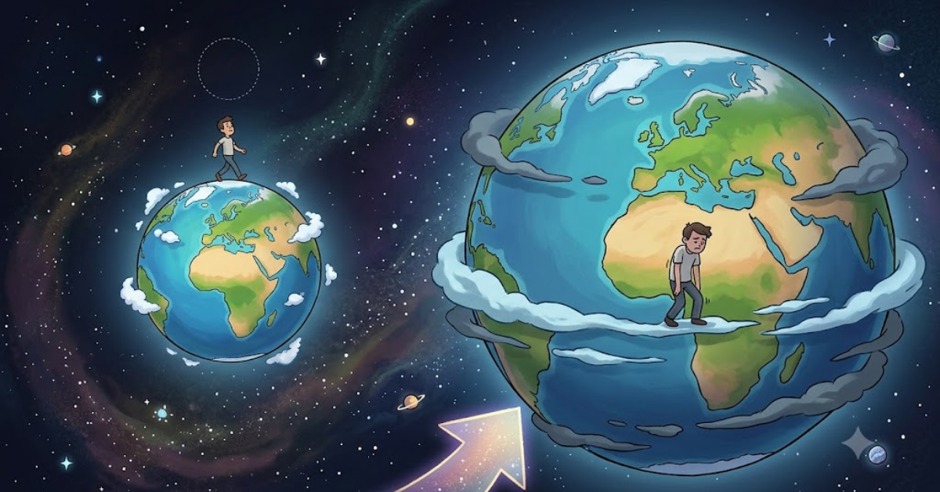
What if Earth were twice its current size? Discover how gravity, breath, oceans, and the human body itself would change under a heavier, unfamiliar pull.
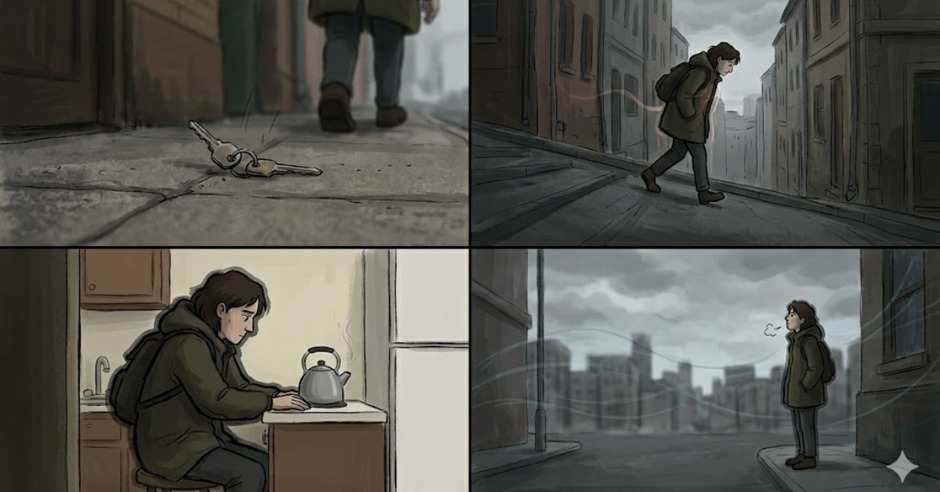
You are walking home, keys jingling in your pocket, when the thought arrives uninvited: what if Earth were suddenly twice its size? You stop mid-step, right there on the pavement, and the question refuses to let go.
The answer comes faster than you expect it to. A larger Earth would not simply hand you more ground to stand on. It would hand every kilogram around you more weight, gravity would tighten its grip on everything at once, and the world you know would stop feeling like itself.
Gravity Takes Hold
It would start with your body, immediately. You would drop your keys, and they would strike the pavement faster than your eyes expect, landing with a sharp crack that sounds slightly wrong. You would crouch to pick them up and feel the extra effort in your legs mid-movement.
Within the first hour, that effort would spread through everything. Walking would become deliberate: each step would need a conscious push, and your heart would work harder to pump blood upward against the increased pull. That strain would build into a low, steady heaviness that does not lift between movements. Jumping would feel impossible on instinct alone; standing up from a chair would require more intention than it ever has; and a single flight of stairs would leave your legs registering something closer to resistance than effort.
By midday, the concessions would have accumulated quietly. You would take the shorter route, avoid the stairs, and rest your hands on the counter while the kettle boils.
You would step outside to clear your head, and even the air outside would offer no relief from the thought.
A Heavier Sky
The clouds would sit lower than usual, heavier and more compressed, the air beneath them visibly thicker than it was this morning. A breeze would move across your face, pressing gently, as though the air had gained weight and were no longer willing to move aside easily.
You would take a breath and notice that filling your lungs costs a fraction more than it always has. Basic atmospheric physics says as much: increased gravitational pull compresses gases more tightly near the surface, raising pressure in ways the body would feel long before any instrument confirms it.
Across the sky, a bird would beat its wings in short, urgent bursts just to hold its height, and it would not be the only thing struggling; aircraft designed for today’s atmosphere would need more lift, more fuel, and longer runways, the sky still full of machines but fewer of them, moving more carefully through air that had become heavier than the engineers expected.
By the time evening came, you would still be carrying all of it.
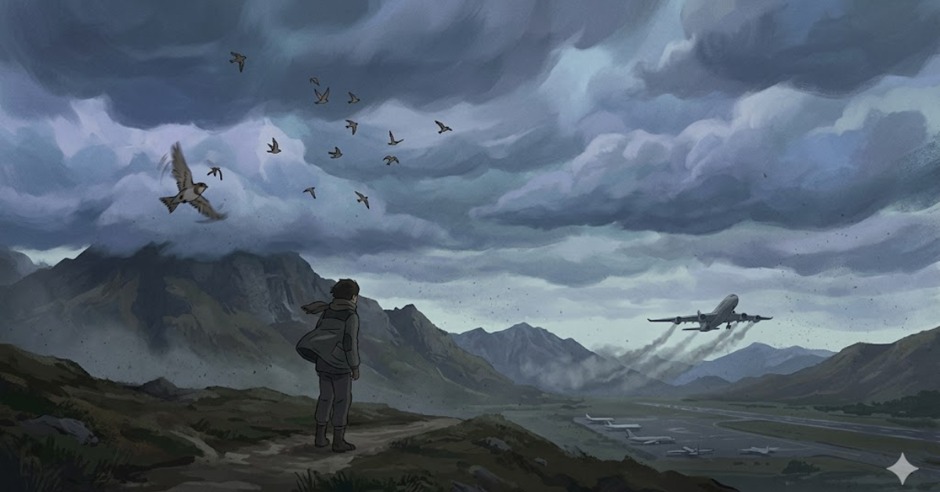
Thick atmospheric pressure changes challenge aviation
Land and Motion
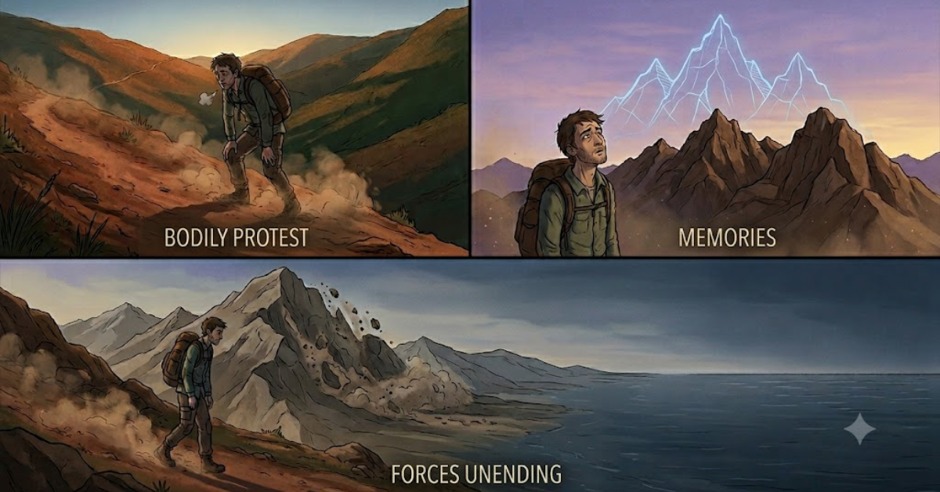
The next morning, you would turn onto a slope you have climbed a hundred times and find your legs protesting halfway up. Your breathing would shorten sooner than it should, your footsteps pressing deeper into the dust with each stride.
You would pause at a point where you never have before, standing there simply waiting for your body to agree to continue; the hill would not have changed, yet the effort required to climb it would. Looking up toward the peak, its outline would sit differently against the sky, closer to the horizon than memory insists it should be, and the reason would be the same one slowing your legs.
Mountains would be forced down under their own doubled mass, their peaks crumbling as the rock beneath exceeds its structural strength; the highest points on a doubled Earth would stand thousands of feet lower than Everest, settling into a flatter, wider horizon by the same force working quietly against your knees.
That same pull would carry you down the slope and onward, past the dust and stone, until the ground gave way to water.
Oceans and Tides
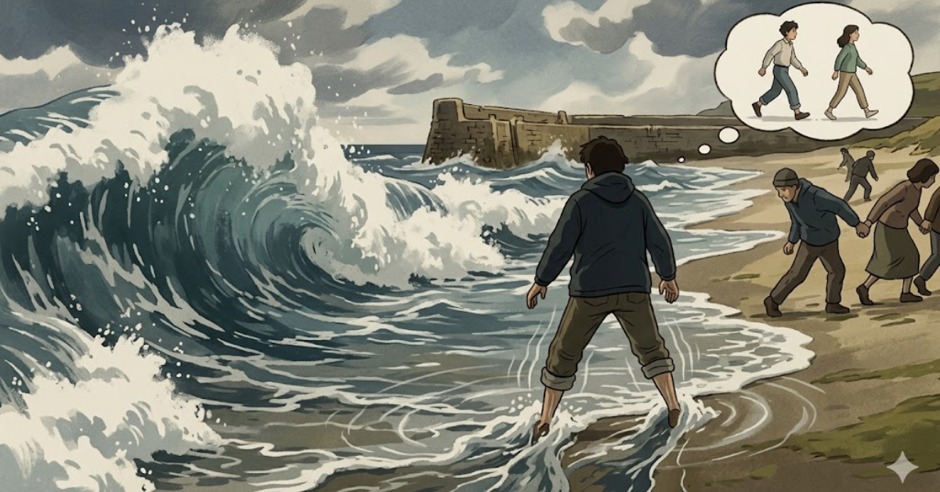
At the waterline, the difference would be impossible to miss. Waves would not splash; they would crash, the force travelling up through the wet sand into your knees and chest, arriving there ahead of the roar that follows. When the water reached your ankles, it would press more firmly than it should, and as it retreated.
It would pull with a grip that made you widen your stance before you had even decided to.
You would step back from the edge and glance down the shore at a harbour wall that has stood longer than anyone living can remember; the water meeting it would look different now, as though each wave carried a little more weight than the one before.
You would turn away from the water, and what you would notice next is how differently everyone around you was already moving.
Life Adapts
The ease of moving without thinking would quietly disappear, and you would see it in every living thing around you.
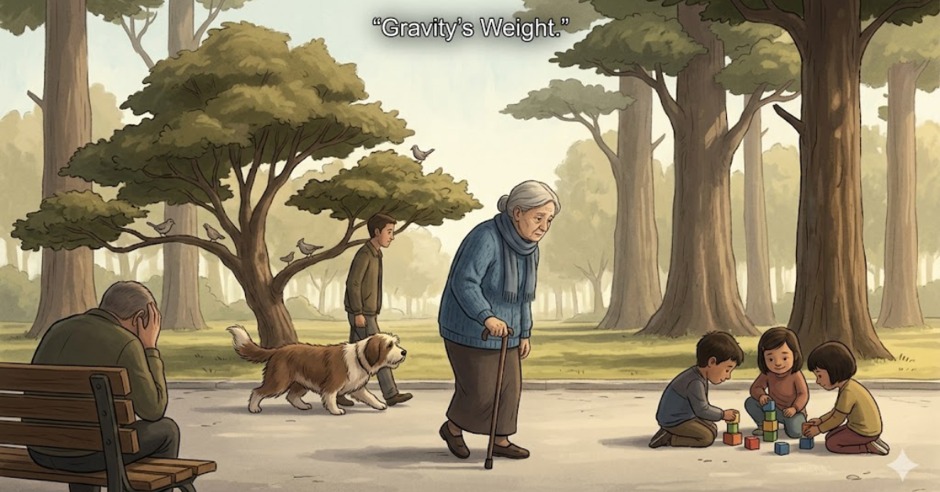
Tall trees would grow shorter and wider, struggling to draw water upward against the increased pull. Large animals would shift toward more compact frames, their bodies redistributing mass to stay stable. Birds would fly lower and less often. The dog nearby would move with a wider, lower gait, its body already making the calculation that height costs more than it is worth.
An older woman would move with a concentration so deliberate that each step would look individually chosen. Children would play closer to the ground, their laughter shorter and more careful.
What began as a change in muscle and bone would not stay confined to bodies for long; it would climb into every system built on the old assumption of a lighter world.
The Human World Adjusts
Give this pressure a month to settle into the infrastructure, and it would show up everywhere at once.
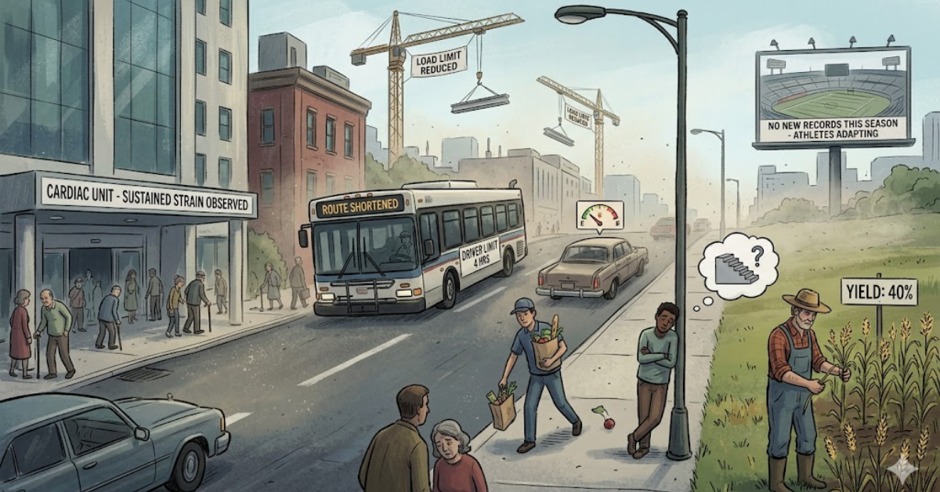
Bus routes would shorten because drivers could not sustain longer shifts. Cranes would lift less, slowing construction. Cars would consume more fuel. Farmers would find crops allocating more energy to structural support and less to yield. Athletes would watch their records dissolve. One flight of stairs would require planning, and carrying everything from the car in a single trip would stop feeling lazy and become impossible.
Cardiologists have long studied how sustained physical strain affects the heart over time, and a doubled gravity would create exactly that kind of pressure across an entire population, filling healthcare systems with people whose hearts and joints carried the accumulated cost of ordinary days lived under a heavier pull.
The city would not collapse; it would stop working the way it was built to, quietly and persistently, until everyone inside it was too tired to be surprised.
Somewhere in that thought, the city stops being an idea and becomes a weight on your own shoulders.
Back on the Bench
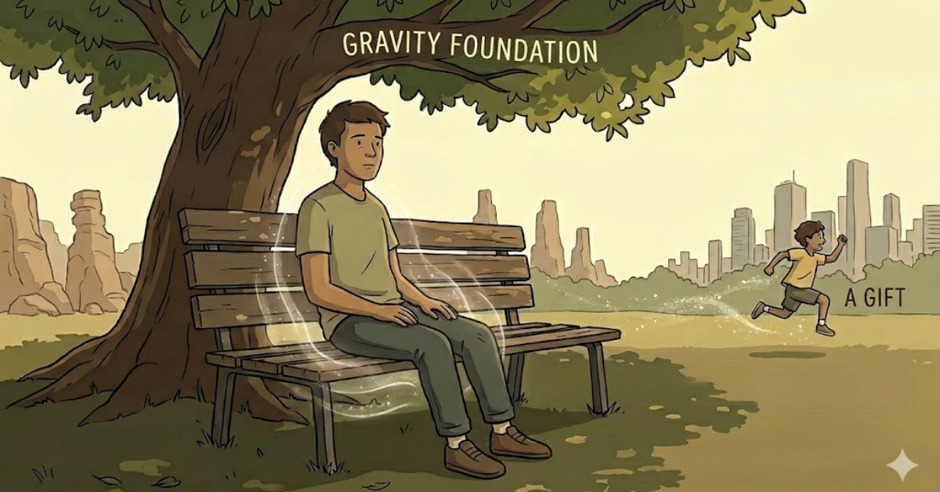
The thought is heavy enough that you find a bench nearby and sit without deciding to, watching the street settle into its ordinary rhythm around you.
You stay still longer than you mean to, letting the weight of the thought rest on you. When you finally stand and take a few steps, the imagined effort lingers in your muscles a fraction too long, not painfully, just persistently, the way a question stays after someone has left the room.
You shift your weight, and the ground beneath you pushes back with the same quiet consistency it always has. Nothing has actually changed. Earth is exactly the size it has always been, gravity exactly as consistent, the ground asking the same thing it has always asked of you. But you are only now beginning to understand how little that has been, and how quietly everything you have ever done depended on the answer staying that easy.
Our height, our breath, the shape of our cities, the way a child runs without once thinking about the effort: none of it is accidental. All of it is a response to a planet calibrated over billions of years to ask just enough of the body to keep it moving, and not one fraction more.
That calibration is not guaranteed to be permanent.
It is a gift, measured out in exactly the right amount of gravity, and like most gifts, you only understand its value when you spend a day imagining what life would feel like if it had been given differently.
Sources
The following sources were consulted while writing “What If Earth Were Twice Its Current Size?”
- How does gravity affect the motion of an object?
https://www.geeksforgeeks.org/physics/how-does-gravity-affect-the-motion-of-an-object-1/ - The science of gravity: applications in biomechanics
https://www.numberanalytics.com/blog/science-gravity-applications-biomechanics - The thought experiment: what if the Earth doubled in size?
https://www.sciencefocus.com/planet-earth/what-if-the-earth-doubled-in-size - What if Earth were twice as big?
https://curiousmatrix.com/what-if-earth-were-twice-as-big/ - The images in this blog are created with the support of an AI tool and reviewed by the author.


Comments