

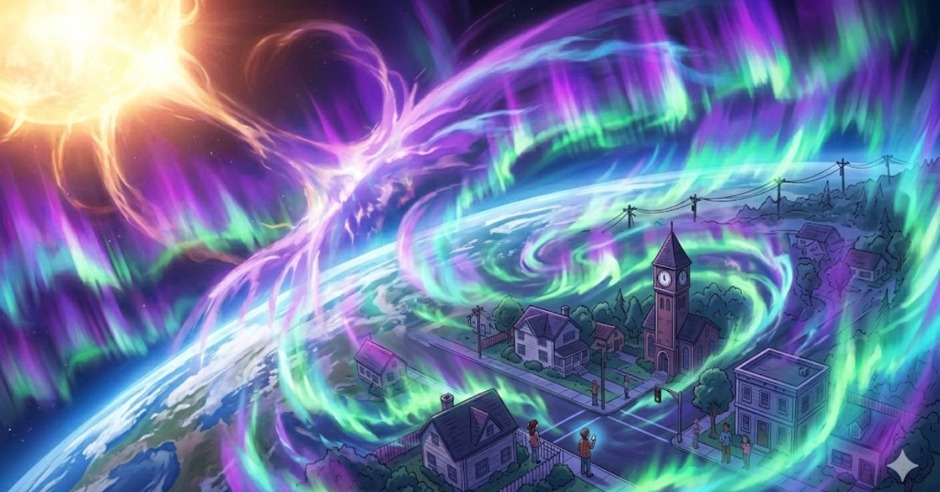
What if a massive solar storm hit Earth and systems failed? Satellites collapse, power cuts out, and life slows as invisible solar forces reshape reality.
The 7:00 AM alarm does not sound. Instead, there is only a strange, quiet stillness.
You tap your phone, but the screen stays dark, a useless slab of glass and silicon: no messages, no notifications, and no connection. Your digital world disappears in an instant.
At first, you stare at the screen, expecting it to wake up after a second or two. But when you look outside, the sky looks strange. Deep purples and bright electric violets swirl above.
That brief confusion fades quickly, replaced by a quieter, heavier thought that settles in before you are fully awake: what if the Sun, that steady source of warmth you take for granted, had already set something in motion long before you noticed the silence?
Before the Silence
That uneasy thought makes you look up instead of at your dead phone. The Sun, which usually marks your mornings so reliably, is occasionally violent beneath its surface. Sometimes, its magnetic surface becomes unstable, twists, and suddenly releases energy. When that happens, space weather stops being distant science and becomes something you experience through dead screens, frozen signals, and a world that feels paused.
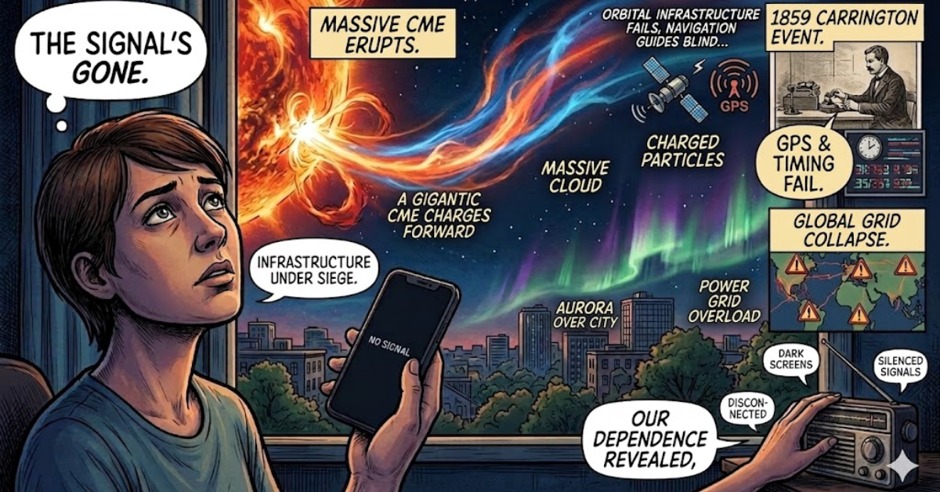
The event begins when tangled magnetic fields on the Sun break, releasing a huge cloud of charged particles called a Coronal Mass Ejection. It travels toward Earth at millions of miles per hour, invisible but measurable. Long before anything appears in the sky, satellites begin to struggle, navigation becomes unstable, and timing systems slowly lose accuracy. That small shift is where the real problem starts.
Scientists compare these events to the Carrington Event of 1859, which was so strong that it set telegraph systems on fire and created auroras far from the poles. If something like that happened today, you might step outside and see unusually bright skies, while the systems that run maps, money, and communication would already be failing quietly.
What happens next depends on how the solar wind interacts with Earth’s magnetic field. When alignment is strong, Earth’s protection weakens. Power grids start to struggle, flights are rerouted, and electronics begin acting unpredictably at the worst possible time. Alerts spread quickly, and engineers rush to protect systems.
You start checking batteries and looking for backup radios, slowly realizing how easily daily comfort turned into dependence, just as the first real disconnections begin.
When the Signal Dies
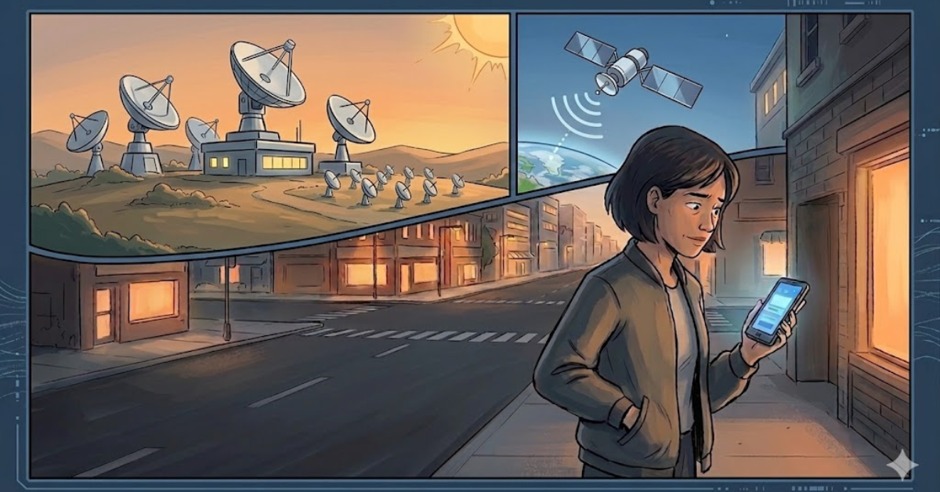
Within minutes, small digital problems start building up. Satellites can shift slightly as the upper atmosphere heats, making GPS, radios, and communication unreliable. Documented by the NASA Scientific Visualization Studio, this transformation turns a connected world into isolated, silent pockets.
The silence feels complete. You look at your smartwatch, expecting it to light up, but the screen stays dark. Outside, a neighbour knocks on your door, confused about what is happening. Even the invisible energy has started moving through systems that power everyday life.
When Sun Strikes Home
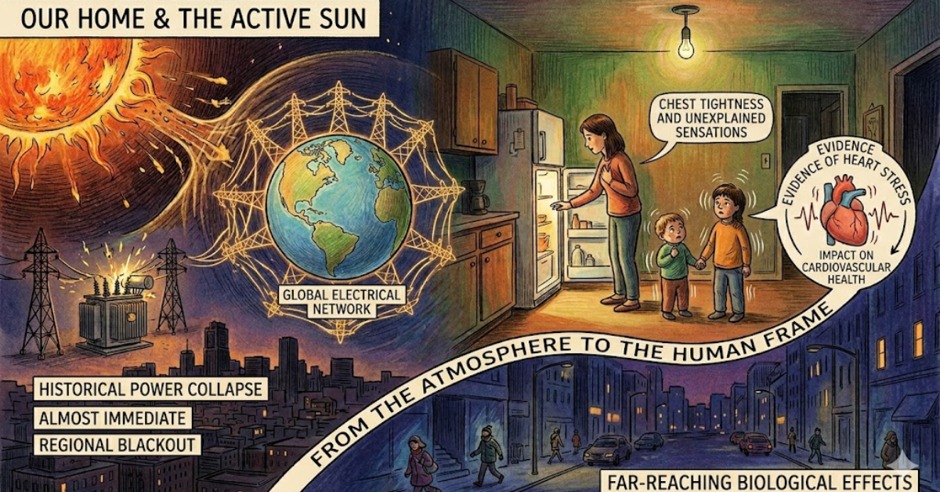
A solar storm reaches far beyond, affecting signals. It deeply affects physical systems. Invisible currents can damage large transformers and shut down electricity across wide areas. This is already proven by history: in 1989, a solar storm caused a blackout across Quebec in seconds, showing how quickly everything can stop.
But it is not only machines that are affected.
A mother in her apartment keeps checking the fridge, while her children stay close, uneasy as lights flicker. There is a strange pressure in the chest for no clear reason, a subtle tightness that makes breathing feel slightly more noticeable than usual, as if the body is reacting before the mind fully understands what is happening. Studies suggest that human health can also be affected, with heart-related problems increasing during intense solar activity.
The discomfort spreads slowly, from people to systems, from homes to cities, showing effects far beyond flickering lights or dark screens.
When Everything Stops
Once the power goes out, everything else starts slowing down, too. The global system that depends on electricity loses coordination. Digital banking stops, cards stop working, and supply chains lose direction all at once.
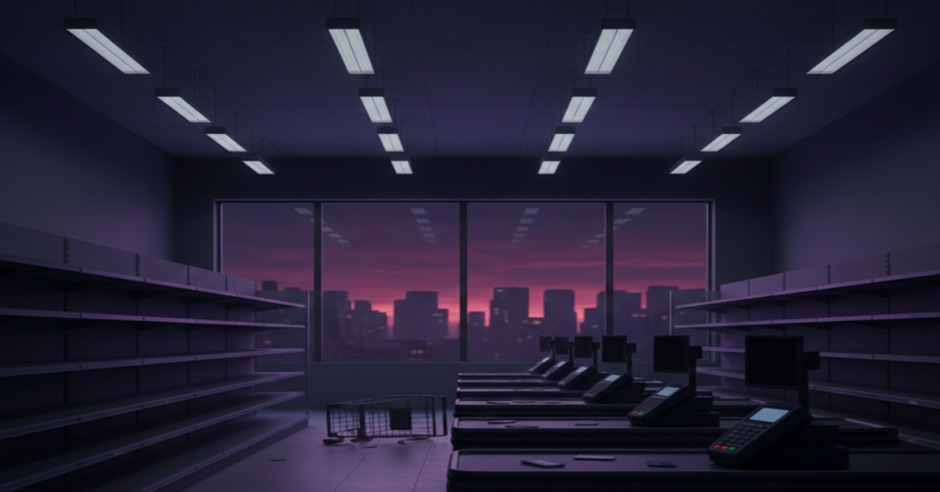
You notice it first at a checkout counter. The scanner beeps once, then freezes. The cashier gives a small, apologetic smile because the system has stopped responding completely.
Outside, traffic lights stop working, fuel pumps reject cards, and people keep checking phones that no longer update, searching for any sign that the wider system is still functioning as expected. That quiet uncertainty spreads quickly, showing how dependent daily life is on invisible systems.
Delivery trucks stop moving, warehouses lose connection, and shelves start emptying. What once felt automatic now needs effort and patience, changing the rhythm of everyday life.
Surviving the Quiet
As weeks pass without power, the first shock slowly fades. Comfort feels increasingly unfamiliar, even as people gradually begin to adjust. Life starts to be measured differently, by light, distance, and shared effort.
Daily tasks feel heavier, but also more meaningful. Conversations with neighbours begin with problems and end with plans. Farms return to manual methods, and people rediscover the effort behind work that was once automatic.
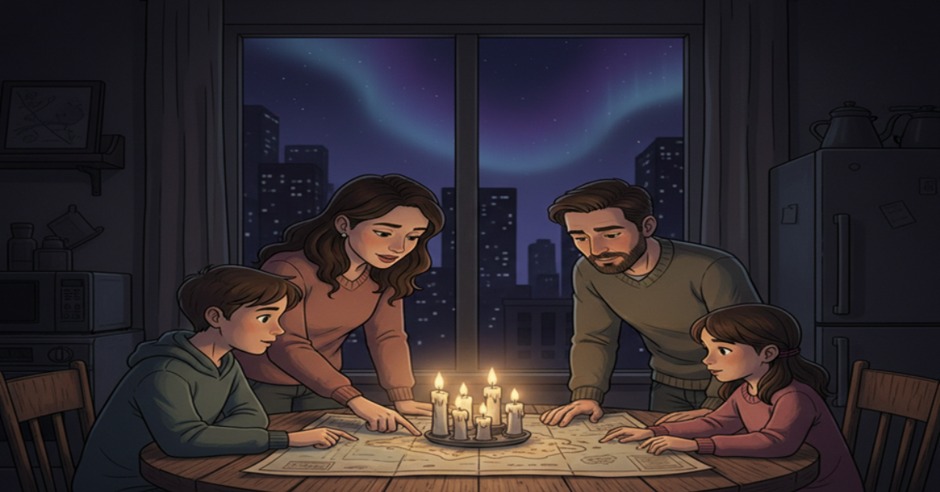
Children learn maps and compasses again. Travel becomes slower and more careful. What once felt easy now requires attention, and with it, understanding slowly grows.
Cities grow quieter, but life continues. People share resources, adjust routines, and rebuild trust through actions instead of systems. In this slower rhythm, resilience appears in small, steady ways.
After the Storm
Years later, power finally returns. Systems are rebuilt, satellites are strengthened, and monitoring becomes more advanced. Yet something inside everyday awareness never fully returns to how it was. There is now a clear understanding that these systems are far less permanent and secure than they once seemed.
The Sun did not destroy everything; it revealed something harder to ignore: how delicate modern life can become when so much depends on invisible systems working without pause. It also reminded us how much of daily life rests on structures that usually stay unnoticed in the background.
So, the next time your phone lights up again, there is a brief hesitation before you reach for it. Outside, the sky remains unchanged, calm and steady as it always has been, while life continues beneath it, moving forward as if nothing had happened.
We are passengers on a planet, moving under a powerful star, slowly recognizing that control is never complete and fully held. Within that realization, awareness itself becomes a quieter kind of strength, steady enough to change how you notice the world without needing to change the world itself.
Sources
The following sources were consulted while writing “What If a Massive Solar Storm Hit Earth?“
- Solar Storms and Flares
https://science.nasa.gov/sun/solar-storms-and-flares/ - A conflagration of storms
https://www.solarstorms.org/SWChapter1.html - Geomagnetic disturbances caused by sun may influence occurrence of heart attacks, especially among women
https://phys.org/news/2025-09-geomagnetic-disturbances-sun-occurrence-heart.html#google_vignette - Could Solar Storms Destroy Civilization? Solar Flares & Coronal Mass Ejections
https://www.youtube.com/watch?v=oHHSSJDJ4oo - The images in this blog are created with the support of an AI tool and reviewed by the author.


Comments