


Discover what happens during a panic attack, from the amygdala’s false alarm to the “panic hangover.” Learn why your body isn’t your enemy, but a protector.
You are standing at the checkout counter, waiting for the cashier to scan the last few items in your basket. While the till beeps away, you quietly wonder what to make for dinner tonight.
Then your heart suddenly slams against your chest.
Within seconds, your breathing no longer feels automatic. Every inhale demands your attention. Your hands begin to tingle, your muscles tighten, and a wave of fear rushes through your body with no explanation.
You look around for the danger.
The cashier keeps smiling. A child asks for chocolate. People continue filling their shopping carts as though nothing has happened.
Everything around you is perfectly normal.
So why does your body suddenly feel convinced that you are in serious danger?
That is what makes a panic attack so terrifying. There is no obvious threat, yet your body launches one of its most powerful survival responses anyway.
So what is actually happening inside your body during a panic attack? Let’s follow it, step by step.
First Few Seconds: Your Body Hits the Emergency Button
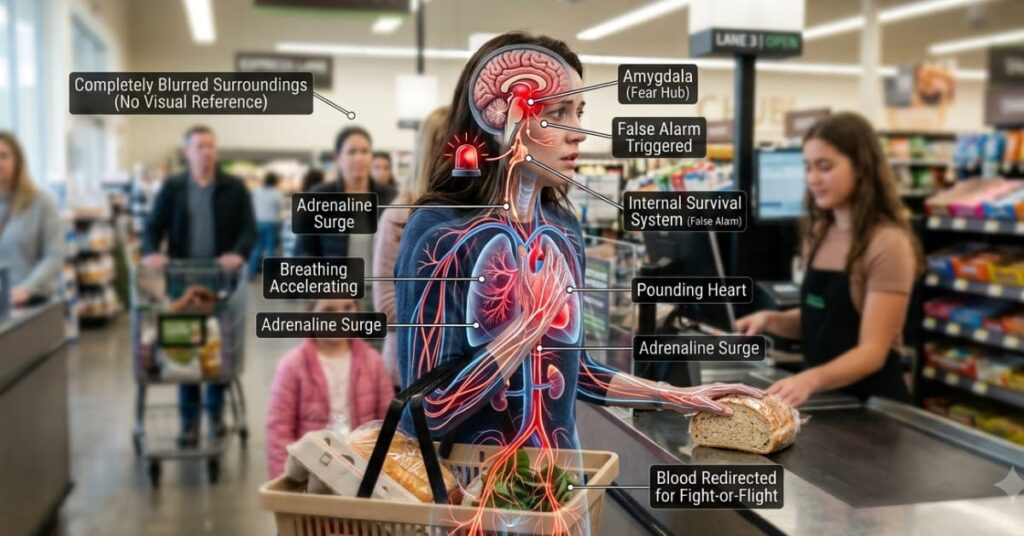
It feels as though the panic attack begins in your chest because that is where the sensations hit hardest. In reality, everything starts inside your brain. Deep within it, the amygdala, your fear hub, mistakenly identifies danger and pulls the emergency alarm even though nothing around you is actually threatening.
Your nervous system does not pause to check whether the alarm is real. Instead, it chooses speed over accuracy. Within seconds, adrenaline surges through your bloodstream, your heart pounds harder, your breathing speeds up, and your body shifts into survival mode before you have time to question what is happening.
At the same time, blood is redirected toward your arms and legs, preparing you to run or fight. This is your fight-or-flight response, a powerful survival system designed to protect you from genuine danger. During a panic attack, however, it activates without a real threat, making the fear feel completely convincing even though no danger exists.
Your body is not trying to harm you. It is trying to protect you from a danger that does not exist, much like the way pain works as a protective alarm. The difference is that, during a panic attack, the threat your body is reacting to exists only inside its own survival system. Once this survival response takes over, it does not stop with a racing heart or rapid breathing. Instead, the false alarm keeps growing, carrying you into the next stage of the panic attack.
Minutes Later: Breathing, Dizziness, and “Am I Dying?”

By the time you leave the supermarket and start driving home, the panic attack is no longer just a racing heart. Your breathing has become fast and shallow, and even keeping your hands steady on the steering wheel suddenly feels like work. With every quick breath, your body loses more carbon dioxide than it should, quietly throwing off the balance your brain relies on.
Then the road ahead begins to feel strangely unfamiliar. Your chest tightens, your fingers tingle against the steering wheel, and a wave of dizziness washes over you. For a frightening moment, it almost feels as though you are watching yourself drive instead of actually being behind the wheel.
Your thoughts immediately jump to the worst possible conclusion.
Is this a heart attack?
Am I about to lose consciousness?
Should I pull over?
Each terrifying thought convinces your brain that the danger is real, triggering even more adrenaline and making the panic attack feel stronger than the moment before.
Although every sensation feels completely convincing, the danger is not coming from the traffic around you. It is coming from your body’s own survival system. And before any of that begins to ease, the panic attack reaches its most intense stage.
10–30 Minutes in: The Peak and the Crash

Somehow, you make it home. You set the shopping bags on the kitchen counter and pause, wondering whether you should start preparing dinner or simply sit down. Home is supposed to feel safe, yet your nervous system refuses to switch off the alarm.
By now, the panic attack has reached its peak. Stress hormones continue flooding your system, your muscles remain tense, and your brain keeps searching for a danger that does not exist. Minutes drag by, each one feeling longer than it should.
Then the storm begins to ease.
Your hands tremble. Exhaustion settles over every muscle, and a strange emotional heaviness takes the place of raw fear. Standing still should not leave you feeling this drained, yet a panic attack demands an enormous amount of energy from both your brain and your body.
As the physical symptoms fade, another battle quietly begins.
What just happened?
Why couldn’t I stop it?
If the panic attack happened in public, you may replay every moment, wondering who noticed or whether anyone thought something was seriously wrong. Those thoughts are common, but they are not evidence that you are broken. They are simply the emotional aftershock of a nervous system that reacted far more intensely than the situation required.
Hours Later: The After-Effects No One Talks About
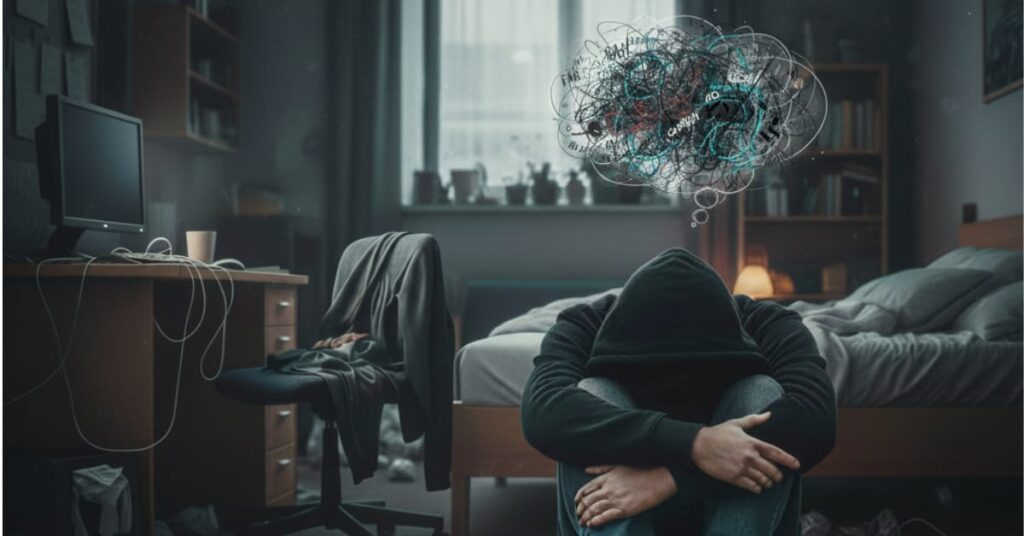
You make yourself a sandwich without really noticing what you put in it, eat it on autopilot, and crawl into bed feeling strangely empty. The panic attack may be over, but your body still feels heavy, foggy, and completely drained. This lingering exhaustion is often called a panic hangover.
Just as you begin drifting off, you jolt awake with the same racing heart and overwhelming fear. These nocturnal panic attacks can interrupt your sleep without warning, leaving you exhausted before the next day has even begun.
As this cycle repeats, your nervous system stops fully relaxing between episodes, creating the same kind of mental fog and disorientation that can develop when your brain loses its sense of time. It stays on high alert, lowering the threshold for the next false alarm and making another panic attack more likely.
When Panic Attacks Keep Repeating

The next weekend, you think about stopping by the same supermarket. Then you remember what happened in the checkout line and decide it can wait another day. Before long, you start avoiding other places too, like your office, busy cafés, and even family gatherings, because your brain quietly labels them as “unsafe.”
Little by little, your world grows smaller. Your body remains trapped in survival mode, pushing your parasympathetic nervous system (rest-and-digest system) into the background. The constant state of alert drains your energy and makes it difficult to feel truly relaxed, even while sitting safely at home. Over time, that relentless exhaustion can begin to resemble the fatigue that follows prolonged sleep deprivation.
This is where cognitive behavioral therapy (CBT) can make a real difference. Rather than simply masking the symptoms, it helps you recognize the link between a racing heart, frightening thoughts, and the false alarm your brain keeps triggering. With time and practice, your nervous system gradually learns that the danger was never real, allowing that constant tension to begin easing.
Reality Check: Your Body Is a Protector, Not an Enemy

A panic attack cannot kill you. It will not make you lose your mind or suddenly stop your heart. What makes it feel so terrifying is not the presence of real danger but the intensity of your body’s survival response.
If you have ever wondered why your body refuses to calm down, remember this: you are not broken. Your nervous system has simply mistaken safety for danger and responded with more force than the situation required. As you begin understanding what is happening inside your body, that fear gradually loses its grip.
If panic attacks or anxiety are interfering with your daily life, reaching out for help is one of the strongest steps you can take. A qualified mental health professional can help you retrain your brain’s false alarm system and teach practical strategies for breaking the cycle. Trusted organizations such as Mind, Mental Health Foundation, and Healthline also provide reliable information, practical guidance, and support for people living with panic and anxiety.
Recovery does not happen because your body stops trying to protect you. It happens because your brain slowly learns that the danger has passed. In time, the alarm grows quieter, your confidence returns, and you begin trusting your body again. You were never truly in danger; your protector was simply working harder than it needed to.
Sources
The following sources were consulted while writing “What Happens in Your Body During a Panic Attack?”
- Panic Attacks & Panic Disorder
https://my.clevelandclinic.org/health/diseases/4451-panic-attack-panic-disorder - Panic Attack Hangover
https://balancerehabclinic.com/panic-attack-hangover/ - What is a panic attack hangover? Plus, 12 tips to help you cope
https://www.calm.com/blog/panic-attack-hangover - Nocturnal Panic Attacks
https://my.clevelandclinic.org/health/diseases/22776-nocturnal-panic-attacks - The images in this blog are created with the support of an AI tool and reviewed by the author.



Comments