

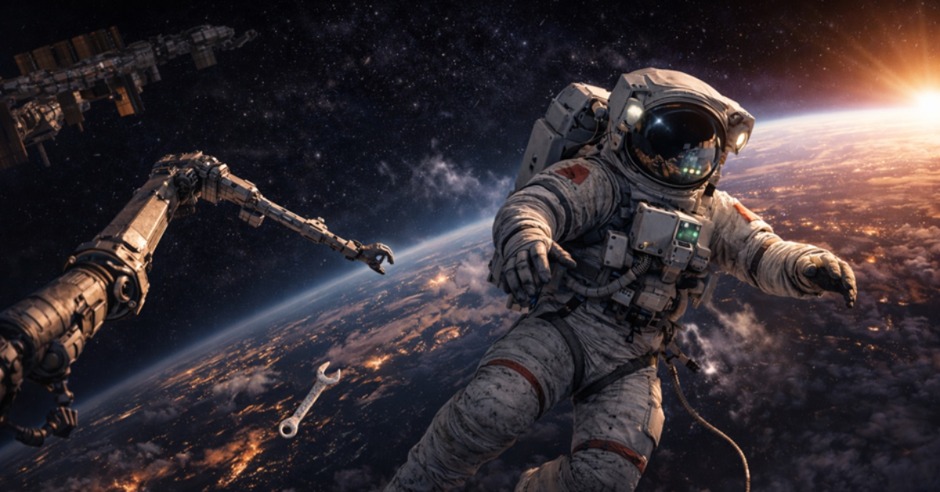
What happens if an astronaut gets lost in space? From silent separation to fading oxygen and rescue limits, survival depends on precision, timing, and control.
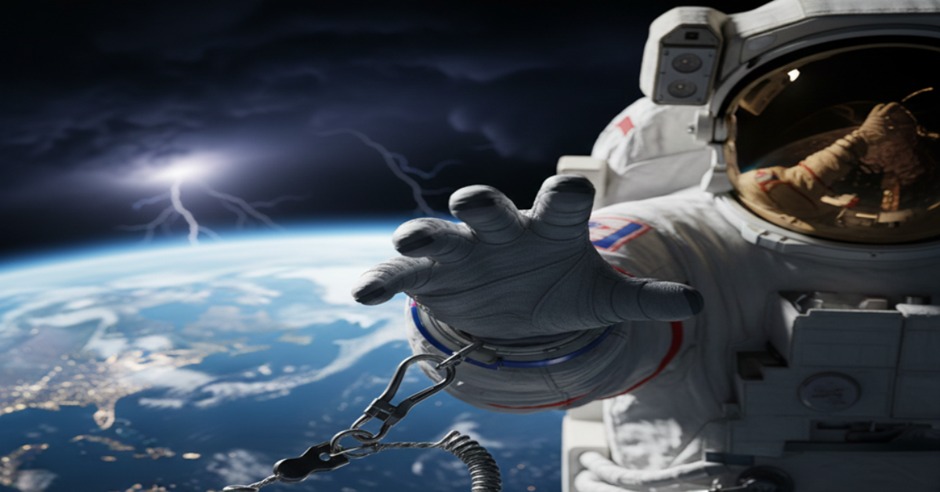
You are fastening a climbing clip 400 kilometres above Earth. Below, the planet is a curved mirror of sapphire and cloud, flickering with the silent electricity of distant storms. The latch clicks. Your checklist is complete. For a moment, the vacuum feels routine.
But in orbit, safety is an illusion held together by a single nylon tether. The instant that the connection fails, the universe stops being a workplace and becomes an abyss.
Phase 1: The Silent Departure
It doesn’t happen like the movies. There is no violent jerk or scream of tearing metal. You simply lose your grip.
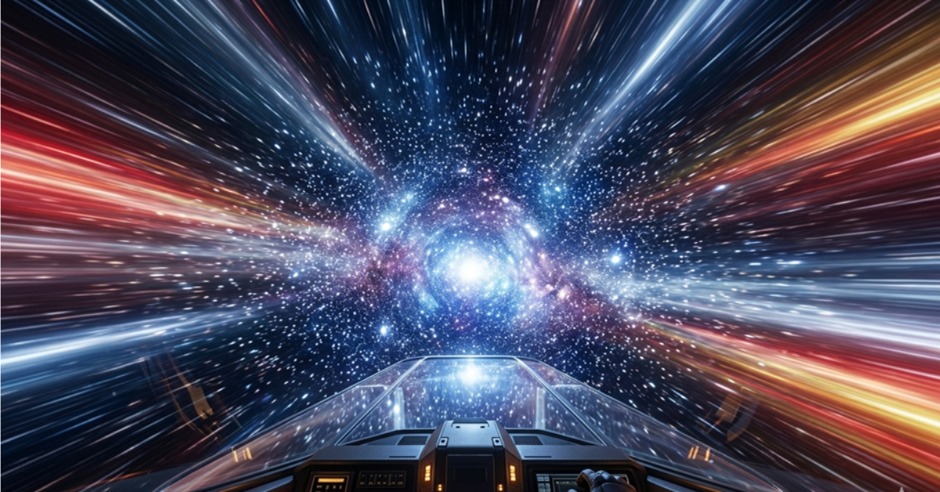
The tether slips free, and the separation begins with an unsettling, gentle grace. At first, it feels as though the International Space Station (ISS) is moving away from you. Yet in microgravity, motion is unrelenting. Without air resistance to provide friction, even the smallest nudge becomes a permanent trajectory. Within seconds, the gap between your outstretched hand and the station’s handrail expands from an arm’s reach to a mocking distance of several metres.
Your brain, shaped by a lifetime of Earth’s gravity, begins to scramble. Research shows that without a fixed horizon, astronauts can lose spatial orientation in under 60 seconds. The station is still close enough to see every bolt, yet it no longer feels like “down” or “up.” You are a satellite now, an independent object orbiting at 28,000 kilometres per hour, drifting through a void that has no floor.
Phase 2: The Biological Ticking Clock
As the station shrinks to the size of a toy, the conflict shifts inside your helmet. Physics is no longer your only adversary; your own biology is turning against you.
Most Extravehicular Activity (EVA) suits provide six to eight hours of life support, but panic is a thief of time. As your heart rate surges, you begin dumping carbon dioxide into the suit faster than the chemical scrubbers can neutralise it.
This is where the mental haze forms. High CO2 levels do more than cause fatigue; they hijack your judgment. Your gloved fingers, already fighting the suit’s internal pressure like stiff balloons, start fumbling. Each panicked breath fogs the visor, smearing the stars into blurred streaks of light. You are no longer just lost in space; you are sealed inside a humid, dimming shell shaped by the heat of your own fear.
Phase 3: The SAFER Gamble
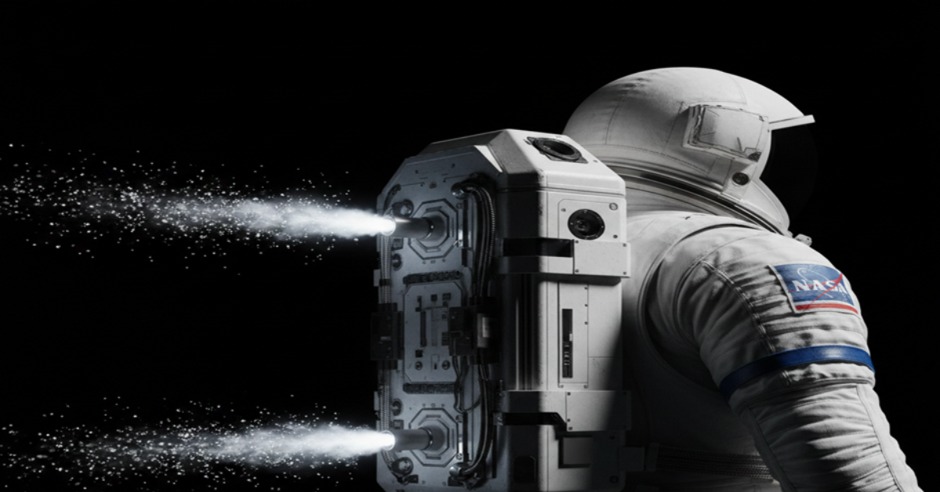
Now comes the one-shot moment. Mounted to your suit is the SAFER (Simplified Aid for EVA Rescue), a compact backpack fitted with small nitrogen thrusters.
It is not a jet engine; it is a cold-gas whisper. The nitrogen supply is finite, and every correction is a high-stakes gamble. Push too hard, and your body enters a “flat spin,” turning the Earth and the stars into a nauseating blur of blue and black.
The rescue becomes a test of cold precision.
The Hiss: You press the joystick. A brief puff of nitrogen nudges you back toward the structure.
The Correction: You wait. You resist the urge to fire again immediately, letting the initial nudge do the work.
subtly begins to dictate your next move.
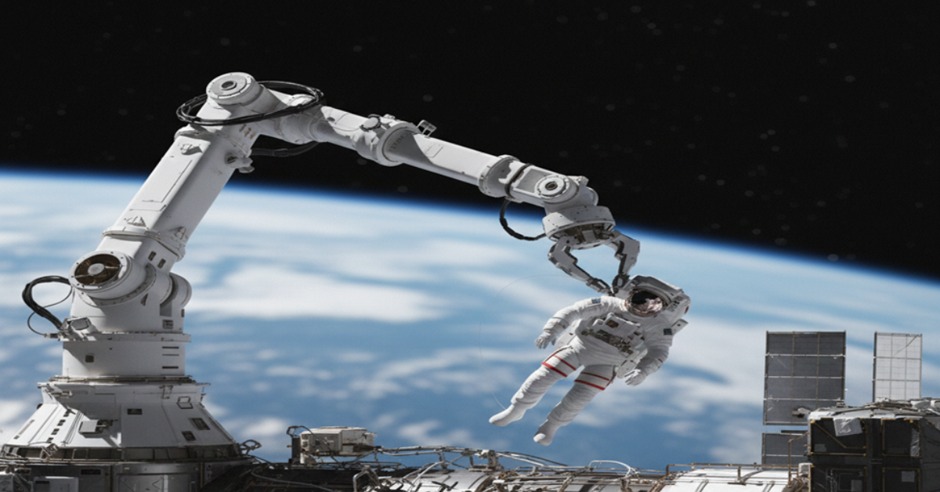
The Final Approach: The station’s robotic arm, Canadarm2, begins its slow, mechanical sweep toward your silhouette.
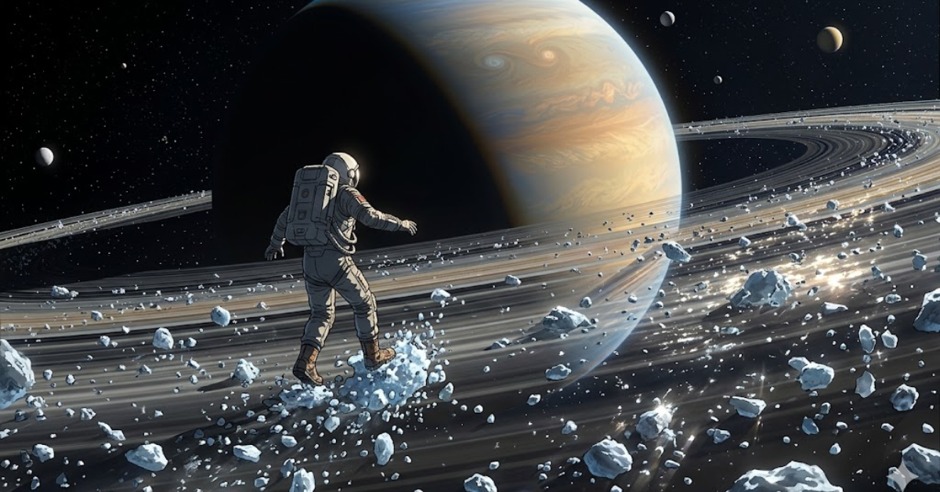
You have one opportunity to align your body correctly. If you miss the catch, there is no dramatic second attempt waiting for you. You continue drifting into the dark, simply.
The Quiet Return
The rescue does not arrive as a cinematic explosion. It comes as a metallic clack.
The robotic arm locks onto your suit. The drift ends. The motion settles. Inside your headset, the frantic rhythm of your breathing finally begins to slow as Mission Control guides you back toward the airlock.
Inside the station, as the pressure equalizes and you peel off the helmet, the smell of space, metallic and faintly like seared steak, clings stubbornly to your suit. Through the thick glass of the cupola, Earth still appears calm and indifferent.
Being lost in space is not defined by sudden chaos. It is a slow-motion test of nerves, oxygen, and geometry. It is a reminder that in the vast silence of the vacuum, survival is not granted by luck, but by the steady application of a plan while everything else continues drifting away.
Sources
The following sources were consulted while writing “What Happens if an Astronaut Gets “Lost in Space”?”
- What happens if an astronaut loses a tool during a spacewalk?
https://starlust.org/what-happens-if-an-astronaut-loses-a-tool-during-a-spacewalk/ - What if you were a space tourist?
https://whatifshow.com/what-if-you-were-a-space-tourist/ - What if you died in space?
https://whatifshow.com/what-if-you-died-in-space/ - Station spacewalks
https://www.nasa.gov/international-space-station/space-station-spacewalks/ - Perception of spatial orientation in microgravity
https://pubmed.ncbi.nlm.nih.gov/9795210/ - The images in this blog are created with the support of an AI tool and reviewed by the author.



Comments