


What if you never slept again? Discover the science of sleep deprivation, hallucinations, brain function, and why humans cannot survive without sleep.
It is 1:17 a.m. The world has surrendered to sleep, yet you remain awake inside a house suspended in silence. Neighboring windows have gone dark, the air has cooled, and the familiar rhythm of the day has quietly faded.
A strange clarity settles over you, as though the night has uncovered a stretch of time that belongs only to you.
You finish the dishes, reply to a few messages, and step outside. The empty street feels peaceful rather than lonely, as if the world has paused and forgotten you’re still awake.
Then a thought slips into your mind:
What if you never had to sleep again?
What If Humans Never Needed Sleep?
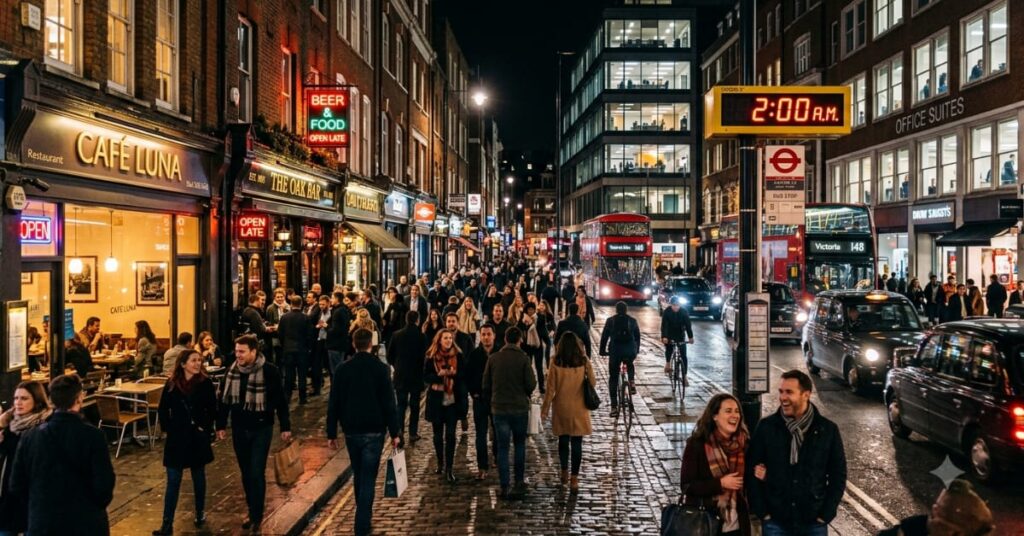
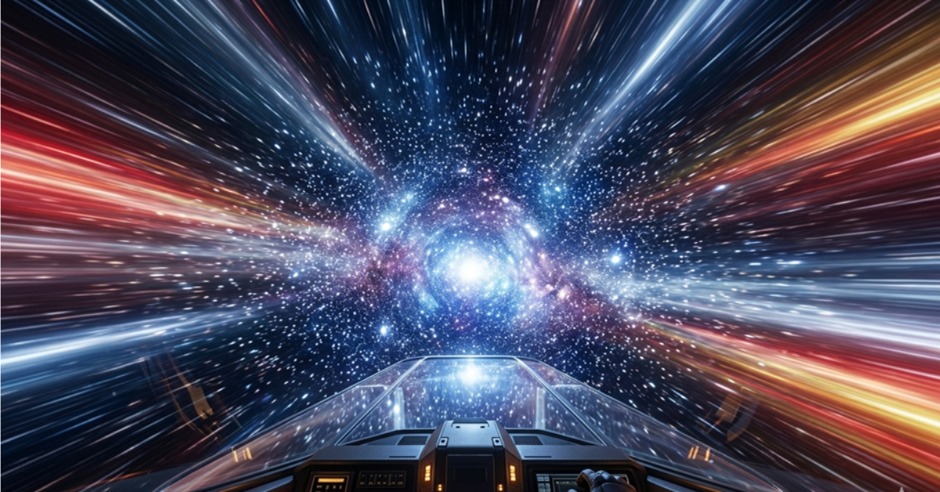
Imagine this isn’t insomnia but evolution. The minutes keep passing, yet fatigue never arrives. Dawn breaks, people wake up, and you realize you still feel exactly the same. Your mind stays sharp, your body never slows, and the biological need for sleep has simply vanished.
Within days, you reclaim nearly one-third of your life. Eight extra waking hours let you finish projects that once took weeks, spend longer with people you love, and finally make time for hobbies that always seemed impossible to fit into a day. Over the years, you realize your lifetime has quietly expanded by years of additional experience.
The transformation doesn’t stop with you. As you step outside night after night, the city never grows quiet. Cafés stay open until dawn, offices glow around the clock, and bedrooms gradually become little more than storage spaces. Even the constant hum of the power grid never fades because society has rebuilt itself around people who never need sleep. With sleep no longer necessary, the health risks of sleep deprivation, including cognitive decline and cardiovascular strain, simply cease to exist.
At first, it feels like the ultimate evolutionary upgrade.
But there’s one problem: that future would require rewriting human biology itself, because the reason humans need sleep is anything but optional.
Why Do Humans Need Sleep?
Then reality catches up.
If you really never needed sleep, your body would have to work very differently because sleep is far more than simply closing your eyes. It is your body’s maintenance cycle, quietly keeping countless biological systems in balance. During deep sleep, neural connections reorganize and strengthen, preserving important memories while clearing away the day’s mental clutter.
Your emotions recover there too. The frustration that felt overwhelming at midnight often seems manageable by morning because your brain has spent the night recalibrating its emotional responses, allowing you to wake with clearer judgment.
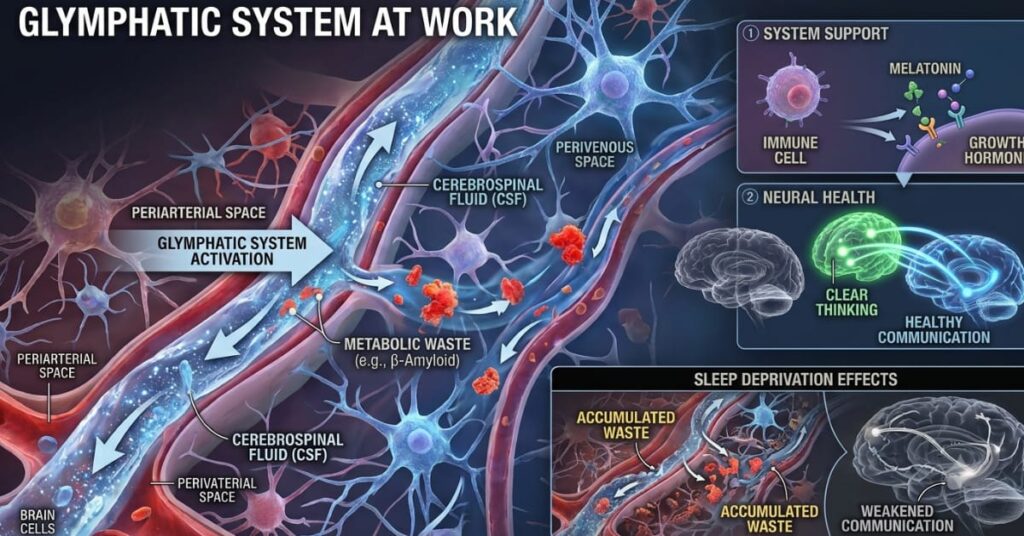
Deep inside your brain, the glymphatic system becomes far more active. As cerebrospinal fluid flows between brain cells, it washes away metabolic waste that accumulates throughout the day, protecting neurons from toxic proteins that would otherwise build up.
Sleep is, therefore, a complete biological reset; it supports your immune system, regulates hormones, balances metabolism, and keeps your mind thinking clearly. Remove that nightly repair cycle, and communication between different parts of your brain gradually begins to weaken.
Suddenly, your late-night superpower doesn’t seem quite so perfect.
A more realistic question now replaces the fantasy:
What would happen if you simply stopped sleeping while your biology stayed exactly the same?
One Day Without Sleep

You decide to push through the first day, convinced one missed night cannot matter that much.
At first, you remain surprisingly functional; although your body feels heavier, you can still hold conversations and finish simple tasks. Then the cracks begin to appear. Your reaction time slows, your concentration drifts, and at work, you find yourself staring at the same email, reading it over and over before your brain finally processes what it says.
Small frustrations suddenly feel much bigger than they should. A minor inconvenience irritates you, stress rises more easily, and the parts of your brain responsible for rational thinking and emotional control stop communicating as smoothly as they normally do.
Meanwhile, another process unfolds beneath the surface. A chemical called adenosine continues building inside your brain; scientists call this increasing buildup sleep pressure, the biological signal that steadily pushes you toward rest. Without sleep, that pressure never resets; it simply keeps climbing.
By the time you’ve been awake for more than twenty-four hours, your thinking has slowed enough that your cognitive performance resembles alcohol intoxication. Research suggests the impairment can approach the equivalent of a blood alcohol concentration of 0.10 percent, exceeding the legal driving limit in many countries.
And you’re only getting started.
Two Days Without Sleep
By forty-eight hours, your body feels weighted; thoughts move with a physical resistance that stalls even simple decisions. Brief microsleep episodes steal seconds at a time as your brain forces fragments of rest.
Lights seem brighter, sounds louder, and every distraction feels sharper. The thalamus, the brain’s sensory relay station, struggles to filter the noise of the world.
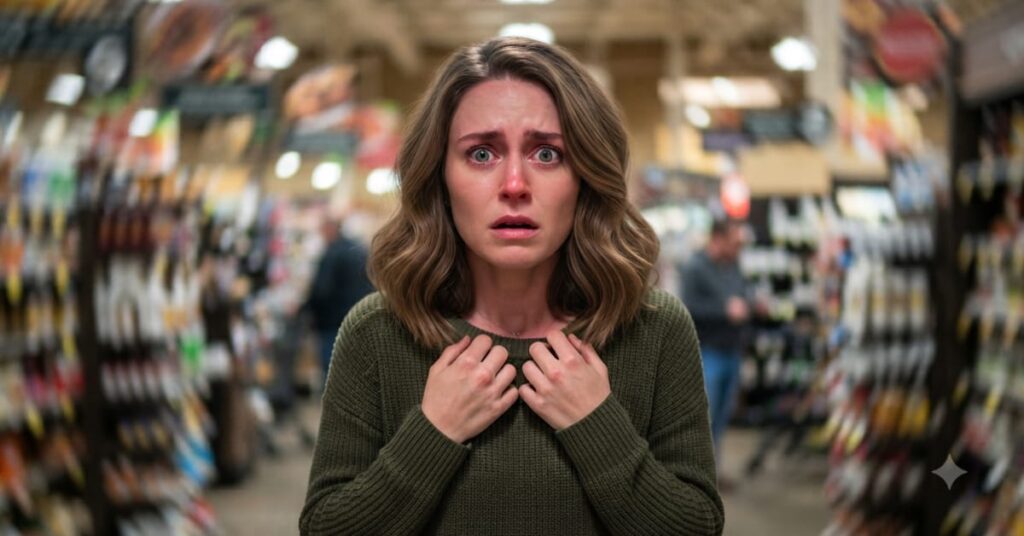
Irritation spikes unexpectedly, anxiety surfaces without reason, and the overwhelming unease begins to feel unsettlingly similar to what happens during a panic attack. Memories fragment, making simple recall a challenge. You might start wondering how long someone can last without sleep. Rare cases like fatal familial insomnia prove that humans cannot endure total sleeplessness for long.
As exhaustion deepens, the boundary between waking thought and dream imagery begins to blur.
One Week Without Sleep
After five or six days, your thinking unravels. Logical reasoning collapses and coordination frays. Hallucinations bleed into the waking world as your brain, denied its restorative cycle, begins to dream while your eyes are open. You are technically awake, but your mind drifts unpredictably across a landscape of waking dreams.
Time itself begins to feel unreliable, as though your brain has completely lost its sense of time and can no longer tell one moment from the next.
Immune defenses falter and inflammation spikes. The body strains to maintain control while your perception twists, leaving the world sharper yet disjointed.
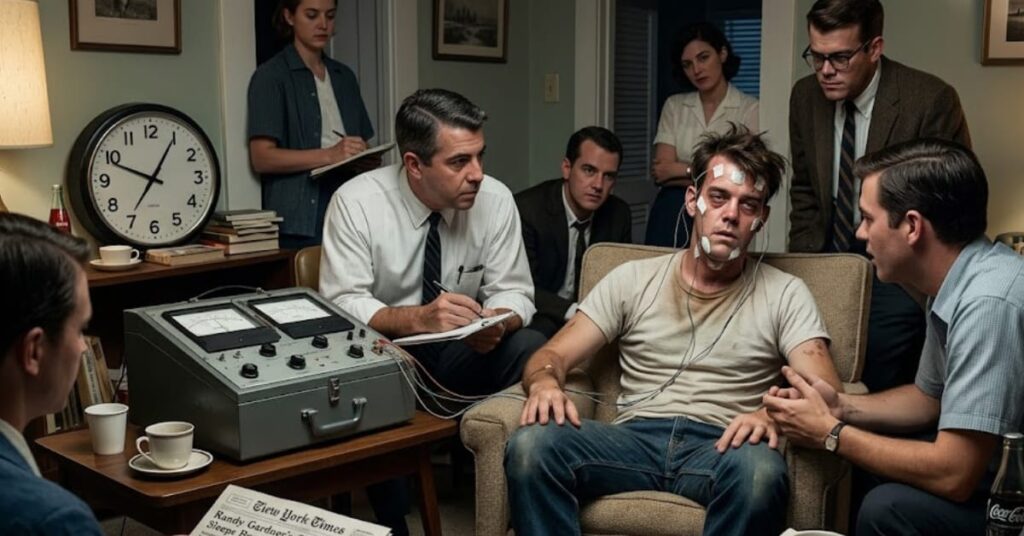
The gold standard for extreme sleep deprivation is Randy Gardner, a 17-year-old student who famously stayed awake for 11 days. By the end, Gardner was a shell of himself, battling profound hallucinations and mood swings, proving that while the body can endure the stretch, it cannot survive the cost.
Could Humans Actually Live Without Sleep?

Then you blink.
The hallucinations disappear, your thoughts settle, and reality returns.
That’s because your brain was never designed to stay awake forever. As sleep pressure builds, chemical signals and even brief microsleeps force your body toward rest, making permanent sleeplessness virtually impossible outside extremely rare neurological disorders.
In reality, most sleep problems involve disrupted sleep, not the complete loss of it. Your biology has built-in safeguards, constantly working to protect the mind you’ve just imagined losing.
Why Sleep Is More Important Than You Think
You glance at the clock.
It’s 1:20 a.m. again. The street outside is just as quiet as when this journey began. Your skin is ordinary, your mind is grounded, and your bed is exactly where you left it.
Sleep never stole a third of your life.
It quietly protected the other two-thirds.
So tonight, don’t see sleep as time lost. See it as the invisible guardian that keeps your memories sharp, your emotions steady, and your reality intact.
The most powerful part of your day may be the one you never remember.
Sources
The following sources were consulted while writing “What If You Never Slept Again?”
- What If We Didn’t Need Sleep?
https://www.livescience.com/48465-what-if-cured-sleep.html - Why Is Sleep Important?
https://www.sleepfoundation.org/how-sleep-works/why-do-we-need-sleep - Sleep
https://my.clevelandclinic.org/health/body/12148-sleep-basics - The 5 Stages of Acute Sleep Deprivation
https://www.healthline.com/health/sleep-deprivation/sleep-deprivation-stages - The images in this blog are created with the support of an AI tool and reviewed by the author.



Comments