


What if your brain lost its sense of time? Discover the science behind time blindness, ADHD, dopamine, and why hours seem to disappear without you noticing.
You glance at the clock. It reads 9:02 a.m. Since nothing feels urgent, you open Instagram for what seems like a harmless break. You reply to a message, watch a couple of reels, and tell yourself you’ll get up in just a minute. When you finally reach for your coffee and look up again, the clock reads 11:47 a.m., and the mug beside you has gone completely cold.
What unsettles you isn’t that time passed; it’s that you never felt it moving. There was no blackout or lapse in memory. The hours simply slipped away, quietly and almost politely, without asking for your attention.
Losing track of time feels normal when you’re laughing with friends or caught up in something you love. But when the same thing begins happening during ordinary mornings and everyday routines, something feels different. Structure quietly dissolves without your permission.
And once those missing hours stop being occasional and start shaping your days, a deeper question surfaces:
What if this isn’t a distraction at all, but a sign that your brain is losing its sense of time?
How Your Brain Keeps Track of Time
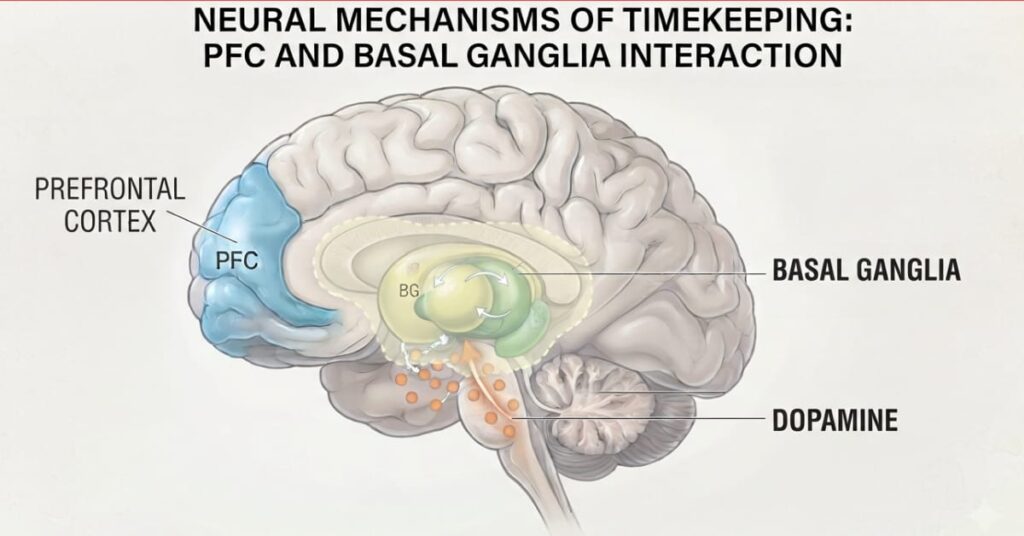
You stare at the cold coffee, wondering where those missing hours went. The answer isn’t hidden in the clock; it’s inside your brain.
Normally, your brain keeps time so effortlessly that you never notice it. You shower, brew coffee, check the oven, and move from one task to the next without calculating a single minute. Behind the scenes, your prefrontal cortex plans what comes next, your basal ganglia estimate how long familiar tasks should take, and dopamine ties everything together, highlighting what feels important, urgent, or rewarding.
Together, these systems build your sense of time from memory, experience, motivation, and expectation. As long as they stay in sync, mornings flow into afternoons, and deadlines approach at a pace you can naturally sense.
But chronic stress, ADHD, or prolonged sensory overload can disrupt dopamine signaling, throwing that internal rhythm off balance. Minutes begin stretching unexpectedly while entire hours disappear without warning. Scientists call this time blindness.
Time blindness isn’t laziness or poor discipline; it’s a neurological mismatch between intention and action. What looks like carelessness from the outside is often your brain struggling to keep time the way it normally does.
One Day Later: The First Signs of Time Blindness

The next day, something feels subtly different. Nothing appears obviously wrong, yet your sense of time begins to drift. A task you expect to take five minutes quietly stretches into half an hour, while entire chunks of the day disappear without you noticing.
Simple routines start to wobble. You put a pot of soup on the stove for dinner, convinced you’ll check it in just a minute. The next thing you know, the smell of something burning snaps you back. The soup is ruined, and you can’t understand how so much time disappeared without you noticing. For the first time, you feel genuinely worried.
Brushing your teeth takes longer than usual, preparing meals becomes unpredictable, and small chores pile up faster than you can finish them. You tell yourself it’s just an off day, but a quiet suspicion begins to grow; time no longer feels the way it used to.
At first, it’s easy to dismiss. But as the same strange pattern repeats, you begin wondering whether your brain is slowly losing its grip on time itself.
One Week Later: How Time Blindness Takes Over Daily Life

By the end of the week, the problem no longer stays inside your mind; it begins reshaping your life. You plan to leave the house in five minutes, yet somehow twenty minutes disappear. Meetings catch you off guard, deadlines seem to arrive out of nowhere, and you’re left wondering where the missing time went.
Friends, family, and coworkers offer simple advice: “Just plan better.” “Set more reminders.” You try all of it. Your phone fills with alarms, sticky notes cover your desk, and calendars become color-coded. Yet nothing changes because the problem isn’t effort. Every attempt to stay on schedule demands constant mental energy, leaving you exhausted while quietly convincing you that you’re somehow failing.
Even small chores become mentally draining. Part of your attention stays fixed on the clock, endlessly recalculating and second-guessing every decision. Time no longer flows naturally; it collapses into one frantic, unreliable now.
By the end of the week, your world feels noticeably smaller. You stop saying yes to plans because you’re afraid of being late, and the stress of constantly losing time begins to outweigh the time you’ve actually lost.
One Month Later: Living With Time Blindness
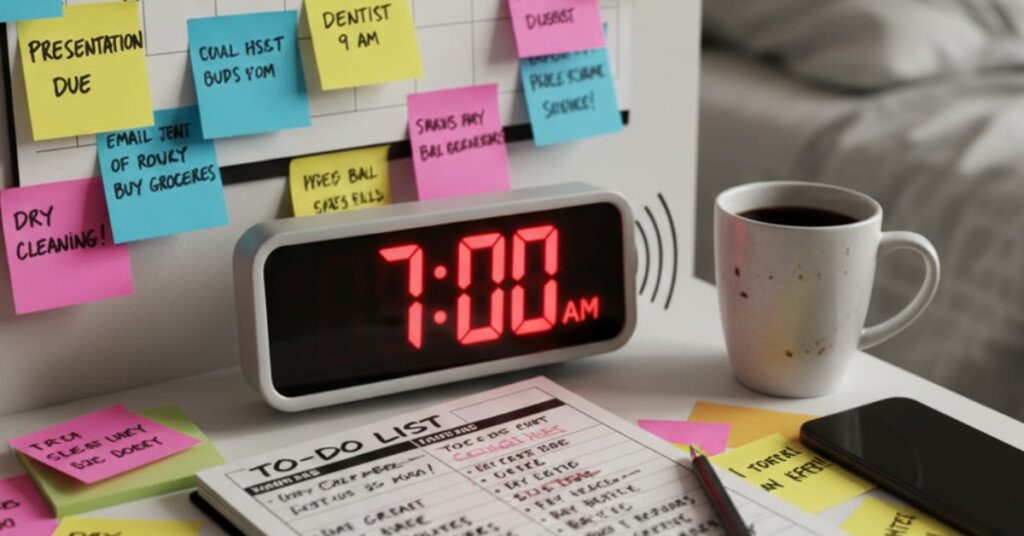
By now, you adapt. Your phone is filled with alarms, your calendar packed with reminders, and sticky notes cover your desk, creating an external system to replace the one your brain no longer trusts. From the outside, you seem organized; inside, every day feels like constant mental work.
What once happened automatically now demands your full attention. Even small delays throw you off, and your mind stays on high alert, endlessly checking the time and recalculating what comes next.
Then the strain becomes physical. By evening, you feel completely drained, your head feels heavy, and the exhaustion is unsettlingly similar to what happens when you go too long without sleep. The harder you fight to stay in control, the more energy it takes. What looks like discipline from the outside feels like survival on the inside.
One Year Later: The Long-Term Effects of Time Blindness
A year passes, and the missed minutes are no longer the hardest part; it’s what they’ve done to your confidence. You begin second-guessing yourself before every commitment, wondering if you’ll be late again or let someone down. Productivity slips, not because you’ve become less capable, but because every day feels like catching up to time instead of living through it.
The change reaches your relationships too. You apologize before anyone complains, hesitate to make plans, and quietly notice people relying on you a little less. No one says anything outright, yet the distance is impossible to ignore. As the pressure builds, your chest tightens before simple commitments, and the constant anxiety starts feeling unsettlingly similar to what happens during a panic attack.
Even rest offers little relief. You wake already feeling behind, as though the day has started without you. The cycle quietly repeats until what began as a neurological difference starts feeling like a personal failure.
Can Your Brain Really Lose Its Sense of Time?

Then reality quietly returns.
You look back at the cold coffee on the table and the clock that somehow jumped from 9:02 to 11:47.
Thankfully, your brain does not lose its sense of time overnight. Time blindness develops gradually through chronic stress, burnout, ADHD, or prolonged mental overload, not in a single morning.
The reassuring truth is that your brain is not broken. With the right support, practical strategies, and patience, it can rebuild a healthier relationship with time.
Understanding Time Blindness Before You Blame Yourself
Time itself does not vanish; your awareness of it does. In a world that constantly competes for your attention, expecting your brain to keep perfect time is an impossible standard. Understanding how your brain experiences time helps you stop measuring your worth in minutes lost or hours wasted.
If this experience feels familiar, know that progress is possible. Research from the Cleveland Clinic, NIH, and Healthline shows that support, practical strategies, and self-compassion can help your brain rebuild a healthier relationship with time.
So the next time you glance at the clock and wonder where the last hour disappeared, don’t begin by blaming yourself.
Start by asking what your brain is trying to tell you.
Because sometimes, the greatest mystery isn’t where time went. It’s why your brain let it slip away.
Sources
The following sources were consulted while writing “What If Your Brain Lost Its Sense of Time?”
- Role of prefrontal cortex and the midbrain dopamine system in working memory updating
https://pmc.ncbi.nlm.nih.gov/articles/PMC3523834 - Study reveals dopamine sends precise signals rather than broad brainwide messages
https://www.news-medical.net/news/20250712/Study-reveals-dopamine-sends-precise-signals-rather-than-broad-brainwide-messages.aspx - Time Blindness
https://www.psychologytoday.com/us/basics/time-blindness/amp - The images in this blog are created with the support of an AI tool and reviewed by the author.





Comments