


What if you stopped sweating forever? Discover how anhidrosis affects body temperature, increases heatstroke risk, and why sweat is essential for survival.
It’s a hot Sunday afternoon in the middle of summer, and you’re meal-prepping for the week. The stove has been burning for hours, sunlight pours through the kitchen windows, and the room feels uncomfortably warm. Normally, by now, your forehead would be beaded with sweat and your shirt slightly damp from the heat.
Today, your skin remains completely dry. No moisture gathers on your forehead or the back of your neck. For a moment, a quiet unease crosses your mind.
What happens if you don’t sweat?
How Sweating Works
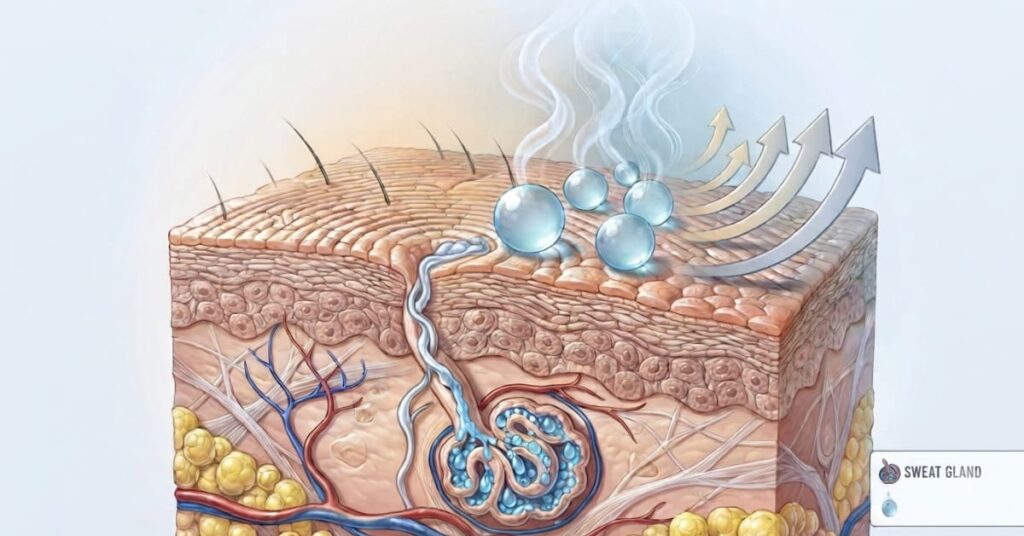
When you sweat, your body isn’t malfunctioning; it’s quietly regulating itself. Tiny sweat glands release moisture that evaporates from your skin, carrying heat away and keeping your core temperature steady even as the world around you warms. Every droplet quietly transfers heat from your body into the air, allowing you to cook, work, exercise, and move comfortably in conditions that would otherwise overwhelm you.
The same genes that form your sweat glands also help shape other structures, including your teeth. That is why rare conditions like ectodermal dysplasia can affect both. When sweating stops completely, a condition called anhidrosis, you don’t just lose moisture: you lose your body’s most powerful cooling system.
To understand why that matters, imagine this happens in the middle of a hot summer, when your body depends on sweat the most. Here is what unfolds over the next year.
Day 1 Without Sweating

You finish meal prepping, step into the shower, and change into fresh clothes. As you toss your shirt into the laundry basket that evening, something catches your attention. It still smells fresh. There are no damp patches under your arms, no sweat marks across your back, and no sticky feeling clinging to your skin. For a moment, it feels like you’ve escaped one of summer’s greatest inconveniences.
But the afternoon heat refuses to let go. Your skin stays completely dry, yet your body feels unusually warm. A dull headache settles behind your eyes, and fatigue arrives earlier than expected, much like the exhaustion that creeps in when your body is pushed too long without sleep.
Beneath the surface, your body is trying to compensate through vasodilation, widening blood vessels near your skin to release heat. Without sweat to evaporate, however, that effort can only do so much.
You assume the kitchen was just too hot. You turn the air conditioner a little colder, sit beneath the cool air, and the discomfort gradually fades away.
You go to bed convinced it was nothing.
Your body knows it was the first warning.
One Week Without Sweating
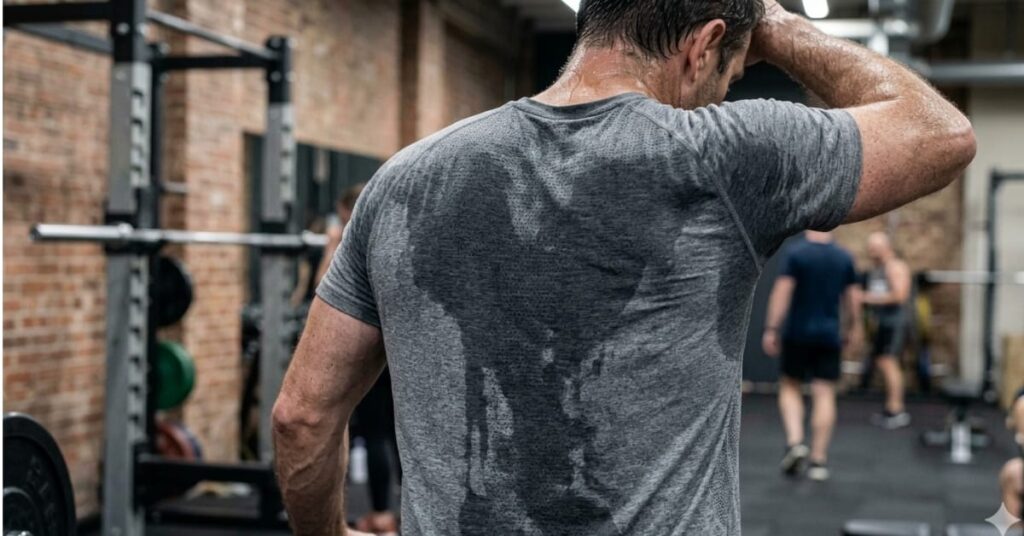
After several days, you notice yourself adapting almost without thinking.
Before leaving home, you check the weather instead of simply grabbing your keys. Errands shift to early mornings or after sunset, and stepping outside at noon no longer feels routine. It feels like a risk.
You find yourself walking from one patch of shade to the next. Warm rooms that once felt ordinary now leave you uneasy, and even a short walk under the summer sun feels far more exhausting than it should.
When a heatwave appears in the forecast, it stops feeling like casual weather news. It feels personal. You begin thinking twice before making plans, knowing your body has lost its most effective way to cool itself.
Without sweat, your risk of heat cramps, heat exhaustion, and even heatstroke rises sharply, especially during exercise or outdoor work. You slow your pace, stay hydrated, and avoid unnecessary heat exposure whenever possible.
By the end of the week, you are no longer taking summer for granted.
You are learning to work around it.
One Month Without Sweating
A month later, avoiding heat is no longer a precaution. It has become part of your lifestyle.
If you work outdoors, your schedule shifts toward dawn and dusk because midday is no longer safe for prolonged activity. Tasks your body once handled naturally now rely on fans, cooling systems, or machines because your biology can no longer keep up.
You also discover something surprising about human evolution. Humans are among the most efficient endurance runners in the animal kingdom, not because we’re the fastest, but because sweat lets us cool continuously while most mammals must stop to pant. Without that ability, your greatest evolutionary advantage quietly disappears.
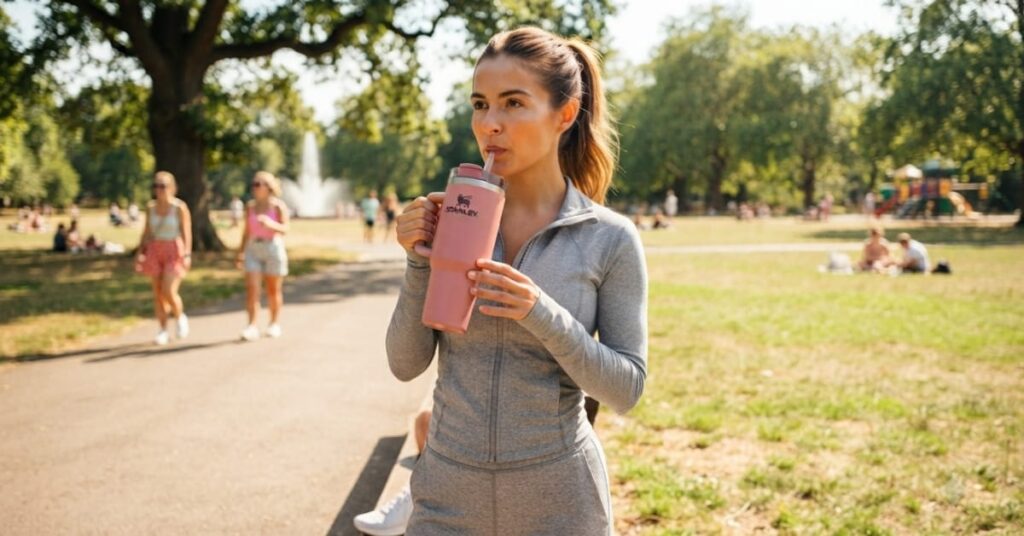
Long walks become exhausting, outdoor exercise feels risky, and even simple chores under the summer sun demand frequent breaks, while your body depends on staying hydrated more than ever just to compensate for what sweat once handled automatically.
Your surroundings begin to change too. Lightweight clothing replaces heavier fabrics, shaded routes become your default, and buildings with good ventilation catch your attention before anything else. Air conditioning is no longer a luxury. It becomes part of your survival strategy.
By the end of the month, you are no longer adapting to summer.
You are adapting your entire life around the absence of sweat.
One Year Without Sweating
A year later, you no longer plan your life around convenience. You plan it around temperature.
Your favorite summer traditions quietly disappear. Sunny beach days, afternoon hikes, backyard barbecues, and outdoor festivals no longer feel like holidays. They feel like risks. Without realizing it, you’ve stopped looking forward to summer altogether.
Friends suggest meeting indoors, vacations revolve around cooler destinations, and invitations to outdoor events become easier to decline than explain. Heat has quietly reshaped your routines, relationships, and even the places where you feel comfortable, and the constant physical strain builds into a pressure that can trigger the same panic your body reserves for genuine emergencies.
What If Everyone Stopped Sweating?

Now imagine this wasn’t just happening to you.
If everyone lost the ability to sweat, entire communities would have to adapt. Air conditioning would become essential rather than optional, sending electricity demand soaring every summer. Cities would rely on shaded streets, cooling centers, reflective buildings, and nighttime activities to stay livable. Schools, sports, outdoor work, and public events would shift toward cooler hours because avoiding heat would become a matter of survival, not comfort.
The economic impact would be just as profound. Productivity during hot months would fall, healthcare systems would face far more cases of heat-related illness, and industries that depend on outdoor labor would struggle to operate safely.
What begins with the loss of a few drops of sweat ends up reshaping the way entire societies live.
Sometimes, the smallest biological functions hold entire civilizations together.
Reality Check: Can Humans Live Without Sweating?
Thankfully, complete inability to sweat is rare. Most people with anhidrosis lose the ability to sweat only in certain areas of the body rather than everywhere.
With medical guidance, proper hydration, air conditioning, cooling strategies, and lifestyle adjustments, many people can reduce their risk of dangerous heat-related illnesses. The severity also depends on factors such as humidity, physical activity, overall health, and access to cooling.
The goal of this thought experiment isn’t to scare you. It’s to reveal how much your body quietly does for you every single day.
The easiest way to appreciate an ordinary function is to imagine living without it.
Why Sweat Is One of Your Body’s Greatest Survival Tools

The oven timer beeps.
You’re back in your kitchen. You pull out the chicken, portion your meals for the week, and finally stop for a moment. Your forehead is damp, your shirt sticks lightly to your back, and sweat runs down your temples.
This time, you don’t wipe it away.
Instead, you smile.
Those few drops weren’t ruining your afternoon. They were protecting it.
The body’s greatest survival tools rarely feel heroic while they’re doing their job.
Sources
The following sources were consulted while writing “What If You Stopped Sweating Forever?”
- Sweat
https://my.clevelandclinic.org/health/body/sweat - Sweating (normal amounts): causes, adjustments, and complications
https://www.healthline.com/health/sweating - Humans hot, sweaty, natural-born runners
https://news.harvard.edu/gazette/story/2007/04/humans-hot-sweaty-natural-born-runners/ - The images in this blog are created with the support of an AI tool and reviewed by the author.





Comments
it is good