

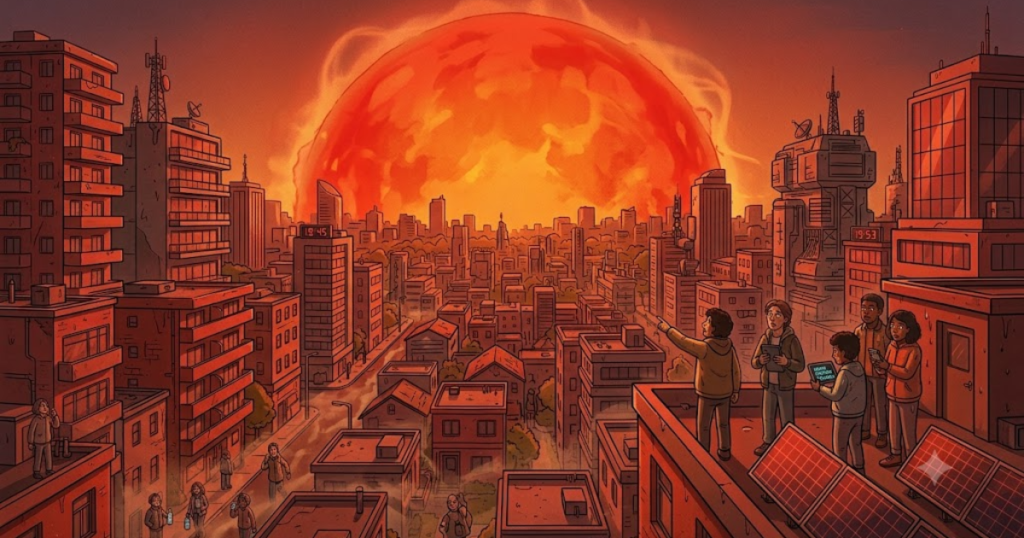
What if the Sun began swelling into a red giant? Step into a morning where warmth lingers, shadows blur, and a star’s slow future unfolds.
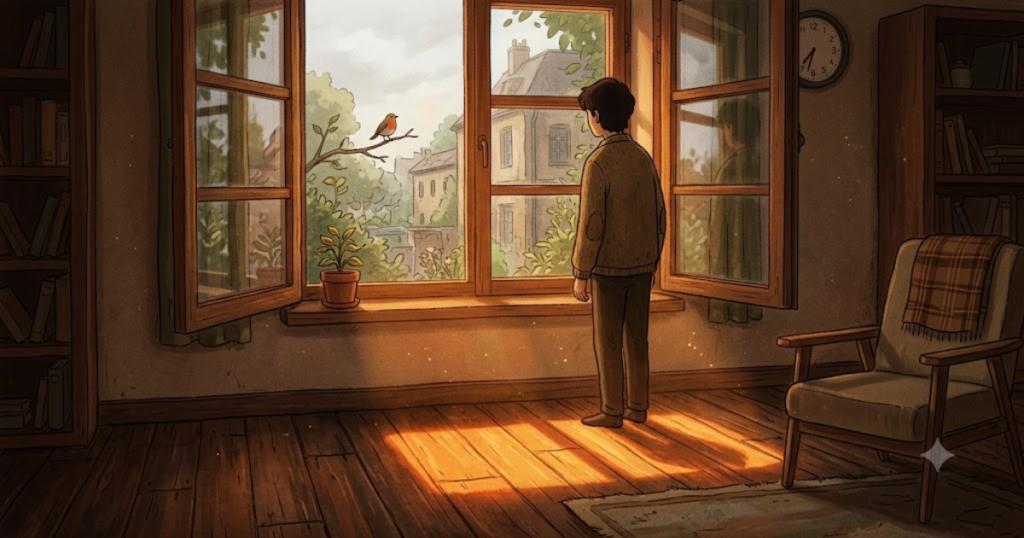
You wake before the alarm, pulled up by light that should not be there yet. It sits on the wall thick and gold, more like syrup than sunlight.
The floor is warm under your feet, not morning-warm, but afternoon-warm, the kind that should not exist at this hour.
Instead of reaching for your phone, you lie still with one question already taking its place, the same one sitting behind everything you are about to notice: what if the Sun began swelling into a red giant overnight?
The Sun’s Fading Balance
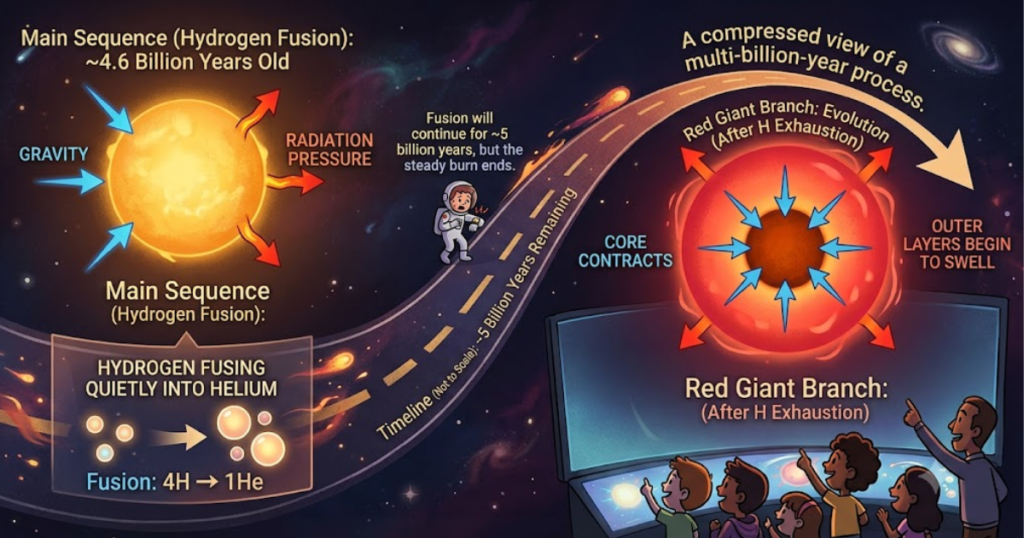
The Sun has stayed the same size for longer than anything else you know, hydrogen fusing quietly into helium deep inside it, hour after hour, without pause. According to NASA, that steady burn will continue for roughly 5 billion more years, though it will not last forever.
When that hydrogen finally thins, the core contracts, and the outer layers begin to swell, turning an ordinary star into a red giant, slowly at first, then with a certainty that nothing could interrupt.
You will not live to see that shift stretch across real time, yet here it is, compressed into a single morning instead of scattered across millennia.
A Golden, Glowing Sunrise
At first, none of it feels wrong. The light spilling across the room looks richer, almost amber, the kind of glow people usually chase with a camera.
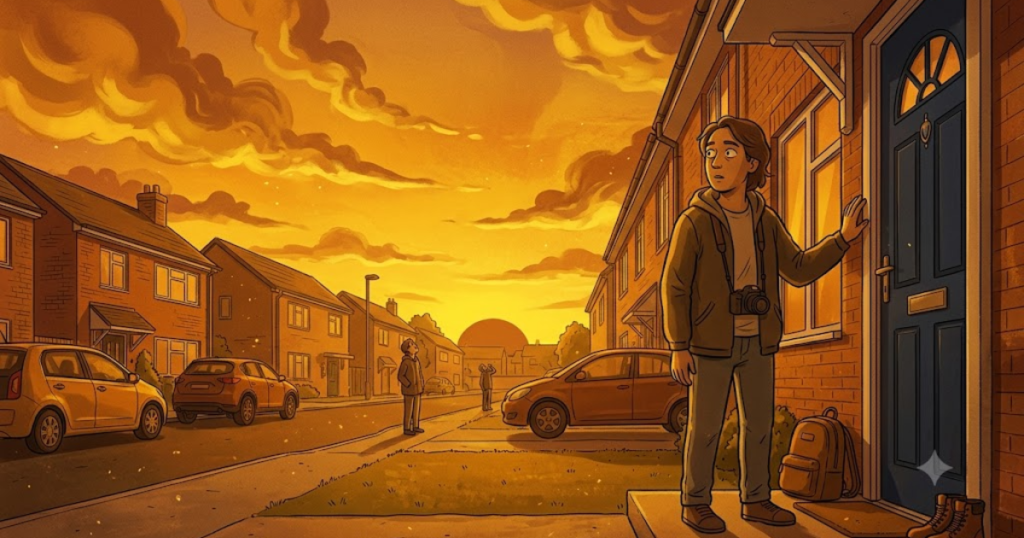
You stop on the doorstep to watch it, your hand halfway to the door, forgetting for a moment why you stepped outside, and you let yourself enjoy the warmth before you notice anything else.
The Sun Grows Bigger
Next morning, the wonder has started slipping into something else. Outside, the horizon looks crowded in a way you cannot immediately name, and the Sun claims more of the sky than it did yesterday. The light no longer scatters the way it used to; it stays, pressing warmth into surfaces that should have cooled by now.
That growing disc is exactly what astronomers expect from a star entering its red giant phase. ESA’s observations show that the outer layers of ageing stars expand dramatically, eventually swelling to hundreds of times their present size.
Meanwhile, you notice sunrise breaking earlier than your clock says it should, and sunset holding on long after the sky usually lets go, and a faint mineral smell rises off the pavement, settling into the air around you.
Shadows Blur, Heat Lingers
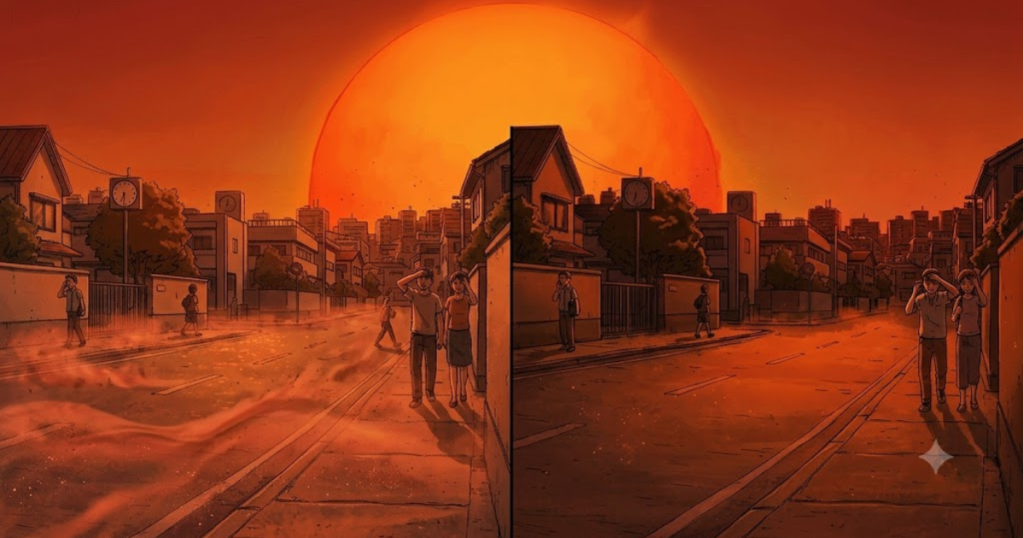
By the third morning, your shadow is where the change first shows itself. The outline on the pavement no longer holds a crisp edge, softening instead into something closer to a bruise, a wash of grey rather than a defined shape, because a larger solar disc wraps light around objects from more angles at once.
You crouch and study the shadow your hand throws across the concrete, watching it waver. The stone beneath your palm carries more heat than it should, and your skin registers it before your mind catches up.

The Ground Does Not Cool Down
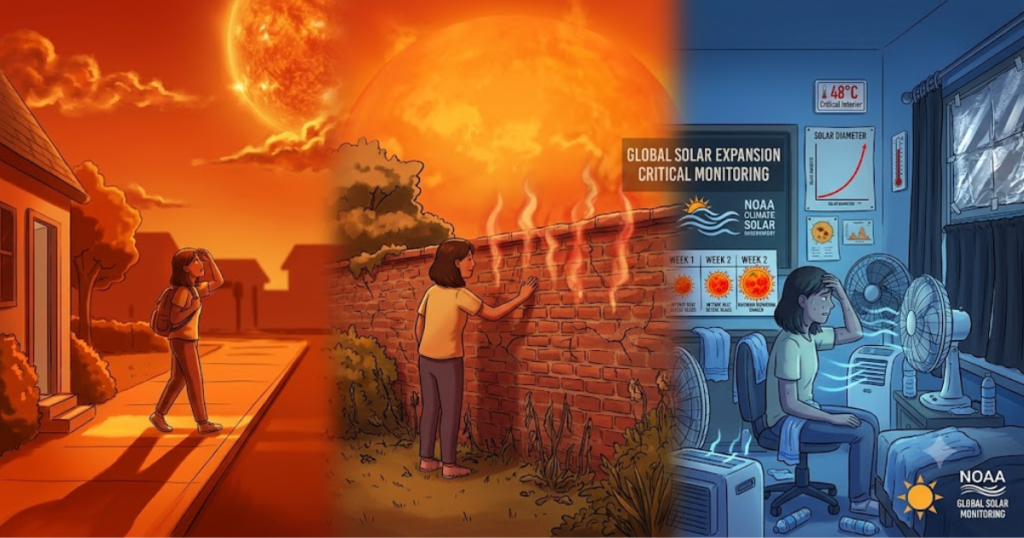
The days that follow blur into each other, each one warmer than the last, until two weeks have passed without you quite noticing how. Soil that once released its warmth by late afternoon now holds it well past midnight, and the breeze, when it comes, pushes warm air sideways instead of clearing anything. Even the garden wall stays warm under your palm long after sunset.
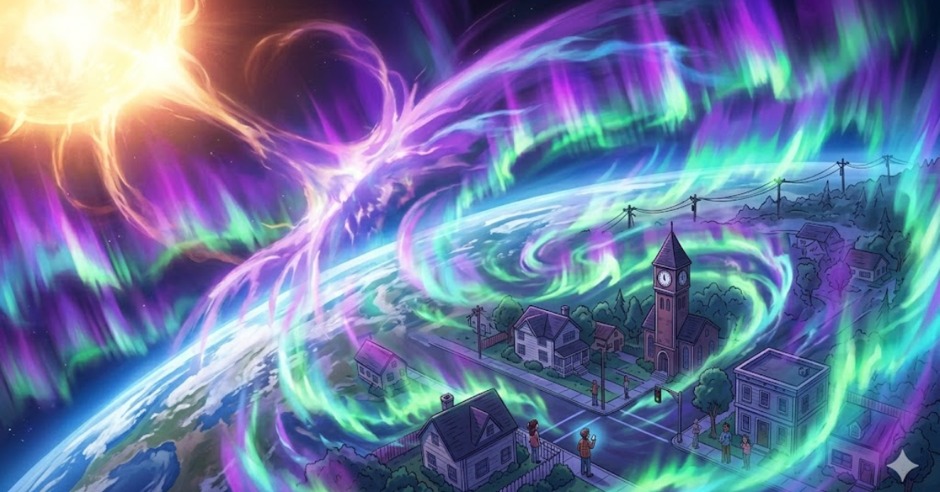
The same heat lifting off the wall carries water vapour into the air, and NOAA’s climate studies show that added moisture intensifies storm systems while dragging jet streams out of their familiar paths. You once read a growing season by instinct; now you watch forecasts contradict themselves from one week to the next, as rain falls where it never used to.
Power grids strain under the sudden swing in demand, tripping in neighbourhoods that never used to lose power.
You begin shifting your hours, running errands before sunrise and finding the streets empty by mid-morning, while the coolest corner of any building becomes the place you quietly drift toward.
Your Body Feels the Strain
After six weeks, your body starts reacting before you consciously notice why, reaching for shade before the heat fully registers. Skin stays flushed long after you step indoors, and each breath arrives already thick, carrying warmth that settles at the back of your throat before it reaches your lungs, a faint metallic taste trailing behind.
Shade stops being a preference and becomes instinct, and even it holds onto heat now.
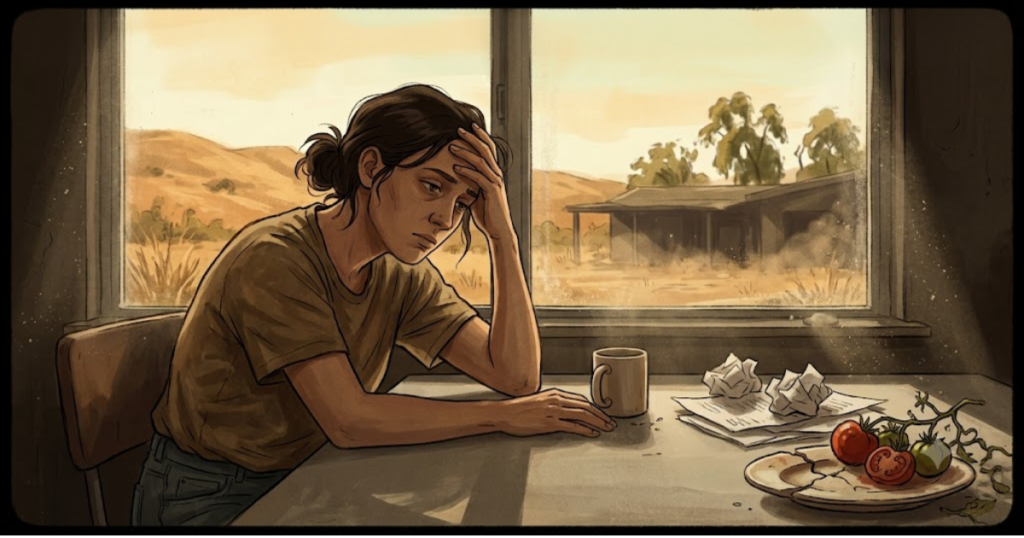
You have slept shallowly enough this week that you surface at the wrong hour, reaching for a coolness that is not there. According to the Cleveland Clinic, this kind of heat wears down the heart over time, disrupting sleep and speeding up fatigue.
You lose your own sentence halfway through it, the thought sitting unfinished in your mouth. On your own windowsill, the tomatoes you have been growing split along the vine.
By the seventh week, patience wears thin before you notice it has gone. You snap at a question that would not normally touch you, unable to explain the words afterwards. A plan you were looking forward to sits untouched, pushed back again without deciding to push it. Your eyes drift to the sky for no reason, finding nothing changed, and you stop noticing you are doing it.
Crops Fail, Grids Strain
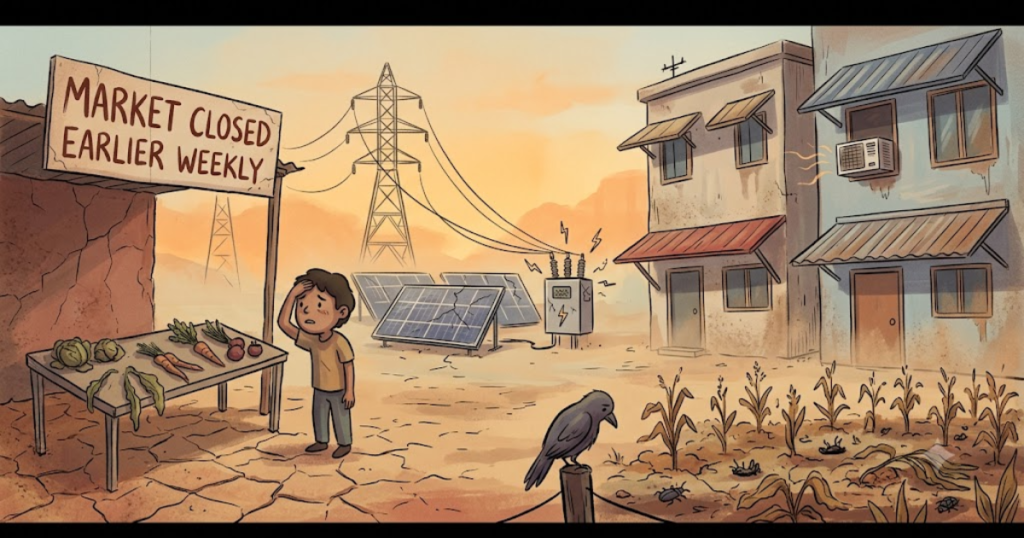
By the time four months have passed, the days have lost their edges, mornings already warm before you wake and afternoons stretching without softening. Evenings no longer carry the relief you grew up expecting, and the insects that once filled the dark with sound have thinned, their calls spaced further apart than you remember.
Without insects, the birds that once fed on them fall quiet too, and fewer insects means less pollination. You notice it first at the market, then in stalls that close earlier each week and harvests that shrink week over week, since crops that needed cool nights stopped producing weeks ago.
Around you, power grids fail during the very heat waves that caused the demand to spike, and you notice new overhangs going up on buildings that never needed them last season. None of it comes from a single decision you can name; it comes from thousands of small ones, made separately, that all end up pointing in the same direction you are already living.
The Sun’s Real Timeline
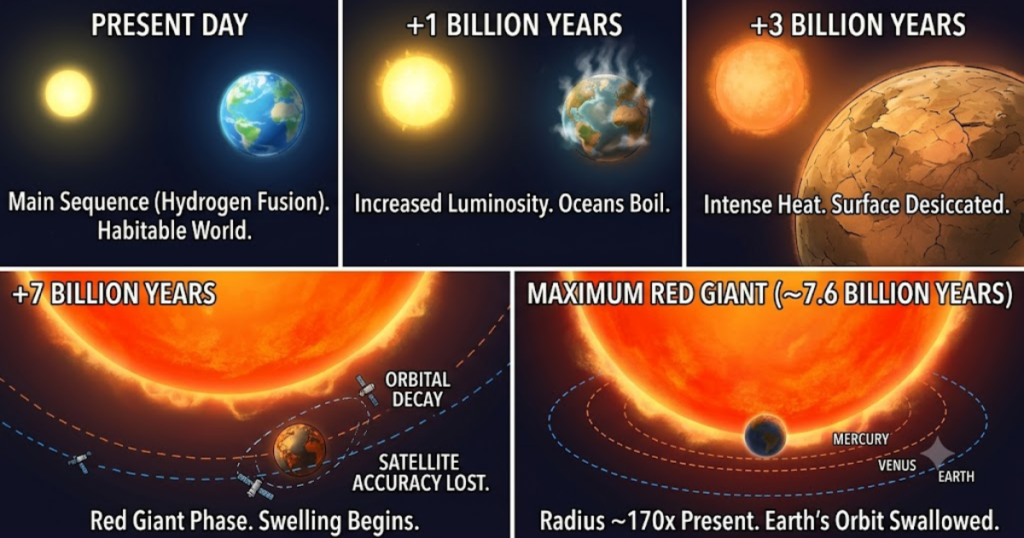
NASA estimates that over the next several billion years, the Sun’s radius will climb to somewhere between 100 and 200 times what it measures today, far enough outward to swallow what is currently Earth‘s orbital path.
Long before that final swelling, the oceans would boil into the atmosphere, and the ground would hold heat straight through the dark. Satellites overhead would eventually drift from their fixed points too, and every clock built on them would lose its accuracy.
That warm floor beneath your feet this morning is the very first trace of that shift, and every stage that follows would feel, to whatever lived through it, exactly as immediate as this morning feels to you now.
Back to the Light
You look back toward the window, and the same amber light falls across the floor while, outside, a bird calls once and goes quiet again.
Nothing has shifted today, nor will it shift within any span a single life could hold. But you have followed where that light is heading, and knowing that changes how it looks from here. The warmth settled into the floorboards this morning, and the star’s eventual transformation is not a separate story; they are the same physics, unfolding at a pace too slow to fear and too certain to forget.
So, before you move through the rest of your morning, notice the light on the floor and the warmth still gathered in the air, then ask yourself one simple question: if the Sun ever began that slow swell into a red giant, would you notice before it stopped being something you could measure in mornings?
Sources
The following sources were consulted while writing “What If Our Sun Began Swelling into a Red Giant?“
- Ageing Into gianthood
https://science.nasa.gov/exoplanets/resources/life-and-death/chapter-6/ - How Venus turned into hell, and how the Earth is next
https://www.space.com/venus-runaway-greenhouse-effect-earth-next.html - How does the Sun make energy?
https://science.nasa.gov/big-idea-3-2-advanced-level-guiding-question/ - Why does the Sun make you Tired?
https://health.clevelandclinic.org/why-does-the-sun-make-you-tired - The images in this blog are created with the support of an AI tool and reviewed by the author.



Comments