

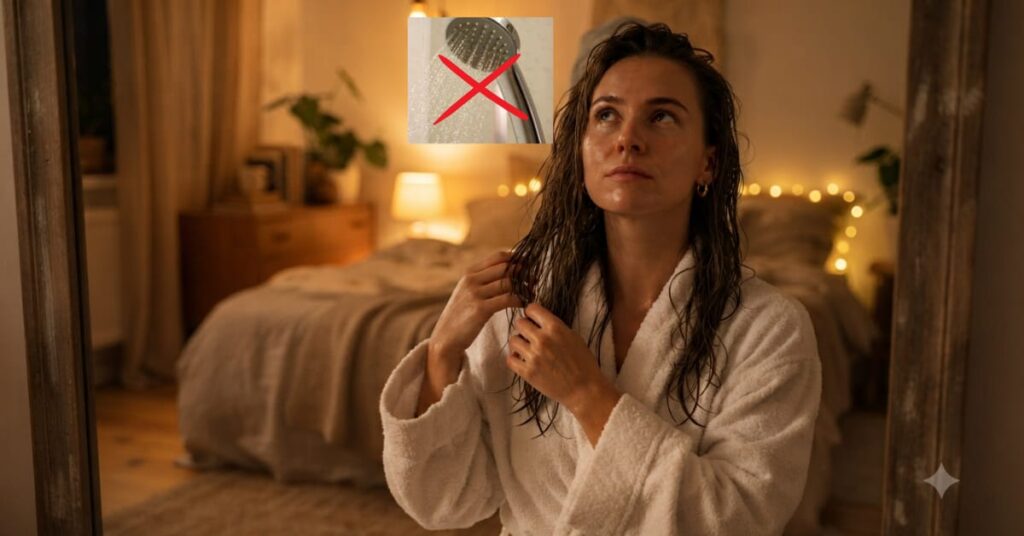
What happens if you don’t shower for a month? Discover how skipping showers affects your skin, body odor, mental health, and overall health after 30 days.
It is a warm summer evening, and after spending the day under the blazing sun, you step into the shower. Warm water washes away the sweat, dust, and stickiness that have clung to your skin all day. A few minutes later, you step out feeling refreshed. As you dry your hair and run your fingers through the freshly washed strands, an unexpected question crosses your mind.
What if this was the last shower you took for an entire month?
At first, it sounds more unpleasant than dangerous. But during summer, when heat, sweat, and humidity are already working against your body, skipping showers sets off a slow chain reaction that becomes harder to ignore with each passing day.
What really happens to your body and mind when you stop showering for 30 days?
The answer is far messier than most people imagine.
How Showering Protects Your Body Every Day

A shower does much more than wash away dirt. It removes sweat, excess oil, dead skin cells, and bacteria that naturally build up on your skin throughout the day. This simple routine helps protect your skin barrier, reduces odor, lowers the risk of irritation and infection, and leaves you feeling both physically and mentally refreshed.
When that daily reset disappears, the effects do not appear overnight. They build gradually, one day at a time, until the changes become impossible to ignore.
What Happens to Your Body When You Stop Showering?
The next morning, you head to work as usual. After a long commute, meetings, and another hot summer day, you return home feeling slightly stickier than yesterday.
By the second day, your skin feels coated with a thin film of sweat, natural oils, dead skin cells, and dirt. Your clothes begin holding onto moisture, and bacteria feeding on that buildup produce the first hints of body odor.
Summer only speeds things up. Heat makes you sweat more, while humidity keeps that moisture on your skin longer. And the discomfort quietly grows with every passing hour.
For now, it still feels manageable.
But the next few days change everything.
What Happens If You Don’t Shower for 3 Days?

Three days later, you step into the office elevator and suddenly become aware of your own smell. You wonder if anyone else has noticed.
By now, sweat, dead skin cells, and natural skin oils have built up enough for bacteria to thrive, making body odor much stronger. Even deodorant offers only temporary relief, and you find yourself standing a little farther from others or feeling self-conscious during conversations.
Later that day, you catch yourself awkwardly scratching beneath your arm during a meeting. Realizing others might have noticed, you quickly stop. Trapped sweat and oils have started irritating your skin, especially around your underarms, neck, and skin folds. The more you scratch, the more irritated those areas become.
That night, the sticky feeling follows you to bed. You keep tossing and turning, unable to fully relax. For a moment, an odd thought crosses your mind: What if you stopped sweating forever? The irony isn’t lost on you. Just days ago, sweat felt like the problem. Now you realize the real problem was never sweating. It was never washing it away.
And after a full week, the consequences extend far beyond odor and discomfort.
What Happens If You Don’t Shower for a Week?

A week later, you walk into the office and notice small things you never paid attention to before. A coworker who usually stands beside your desk takes a step back during conversation. In the elevator, someone subtly wrinkles their nose before looking away. Whether they’re reacting to you or not, you can’t stop wondering.
Later, you catch your reflection in the restroom mirror. Your skin looks dull and greasy. Beneath that buildup, another problem is growing. Sweat, oil, and dead skin have created the perfect environment for fungi to thrive. In warm skin folds, irritation becomes more persistent, itchy rashes can begin to appear, and clogged pores leave your skin feeling rough and uncomfortable.
By now, this isn’t just about feeling dirty.
Your body is beginning to show the consequences, and so are your daily interactions.
Over the following weeks, those changes become impossible to hide.
And after a full month, the consequences extend far beyond your skin.
What Happens If You Don’t Shower for a Month?

A month later, getting ready for work no longer feels routine. You avoid looking at yourself for too long in the mirror because your skin looks darker, rougher, and greasy. Sweat, oil, and dead skin have built up for weeks without being washed away, sometimes leading to dermatitis neglecta, where these layers form stubborn, darkened patches on the skin.
In warm, moist areas, persistent irritation can also develop into fungal rashes.
The changes no longer stop at your skin.
At the office, you notice people keeping conversations short and standing a little farther away. Then something unexpected happens. During an important client meeting, your manager quietly asks your colleague to deliver the presentation you spent weeks preparing. You are told to “support from the back” instead.
No one says anything. They don’t have to. The silence says enough.
On the way home, your chest suddenly tightens. Your heart pounds, your breathing becomes shallow, and your thoughts spiral. For a moment, you wonder if something is seriously wrong with your body. Then you remember what happens inside your body during a panic attack. Unlike that sudden fight-or-flight response, this anxiety isn’t coming from imagined danger. It’s coming from the growing realization that neglected hygiene has started affecting your confidence, your relationships, and even your professional life.
By now, skipping showers no longer feels like a harmless experiment.
It has begun changing how you see yourself and how the world responds to you.
Before you panic, though, here’s the reality behind this thought experiment.
Reality Check: Is It Really Dangerous to Stop Showering?

You are still standing in front of the mirror. Your hair, damp from your evening shower, is almost dry now. It is time for bed.
Then it hits you.
In reality, going 30 days without showering, especially during the peak of summer, is practically impossible for most people. Heat, sweat, body odor, and constant discomfort would push almost anyone back under running water long before a month had passed.
That is exactly the point of this thought experiment.
It was never meant to scare you. It was meant to reveal what your body quietly endures when one simple daily habit disappears.
Why Showering Is More Than Just Staying Clean

A shower does far more than wash away sweat and dirt.
It protects your skin, limits the buildup of harmful microbes, supports your confidence, and helps you feel comfortable in your own body.
The next time you step out of the shower after a long day, pause for a moment.
You have done much more than wash away the day. You have quietly helped your body begin again.
The healthiest habits are often the ones so ordinary that we forget they’re quietly keeping us well.
Sources
The following sources were consulted while writing “What Happens If You Don’t Shower for a Month?”
- How Often Should You Shower?
https://health.clevelandclinic.org/how-often-do-you-really-need-to-take-a-shower - How Often Should You Shower
https://www.healthline.com/health/beauty-skin-care/how-often-should-you-shower#too-few - What happens to your skin if you cannot access showers or soap…
https://www.simplythebasics.org/blog/2022/6/3/what-happens-to-your-skin-if-you-cannot-access-showers-or-soap - The secrets of sweating: how diet and lifestyle affect your body https://bemore.ee/en/sweating/#:~:text=At%20rest,%20an%20adult%20secretes%20about%200.5,able%20to%20survive%20long%20in%20the%20heat.
- The images in this blog are created with the support of an AI tool and reviewed by the author.





Comments