

What happens if you drink liquid nitrogen? Discover how extreme cold freezes tissue, expands into gas, and triggers life-threatening injuries in seconds.
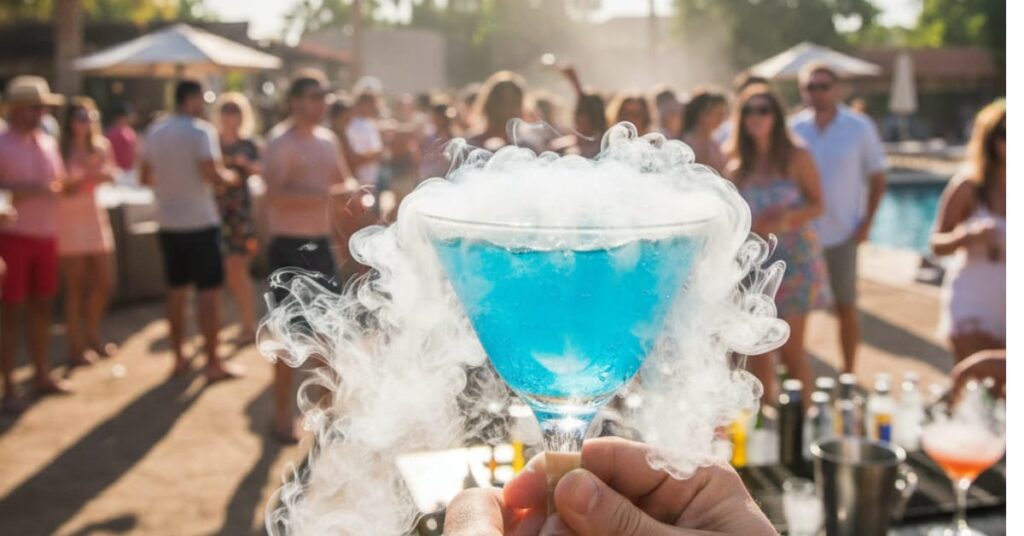
Imagine this. It’s a scorching summer day, and you’re at a fancy party when someone casually hands you a mysterious, frosty drink that looks more theatrical than refreshing. You lift the glass, hesitate for barely a second, and before your brain has time to question it, you swallow.
For a moment, nothing happens.
Then someone says, “That wasn’t a cocktail. It was liquid nitrogen.”
At −196°C (−321°F), your body is already reacting long before you feel the full consequences. The instant that freezing liquid meets warm tissue, physics takes over, setting off a chain of events your body was never designed to survive.
Scientists use liquid nitrogen in laboratories. Chefs use it to create dramatic culinary effects, and filmmakers use it to produce rolling clouds of fog. Inside the human body, however, it becomes something far more dangerous.
Seconds Later: The Freeze Frame
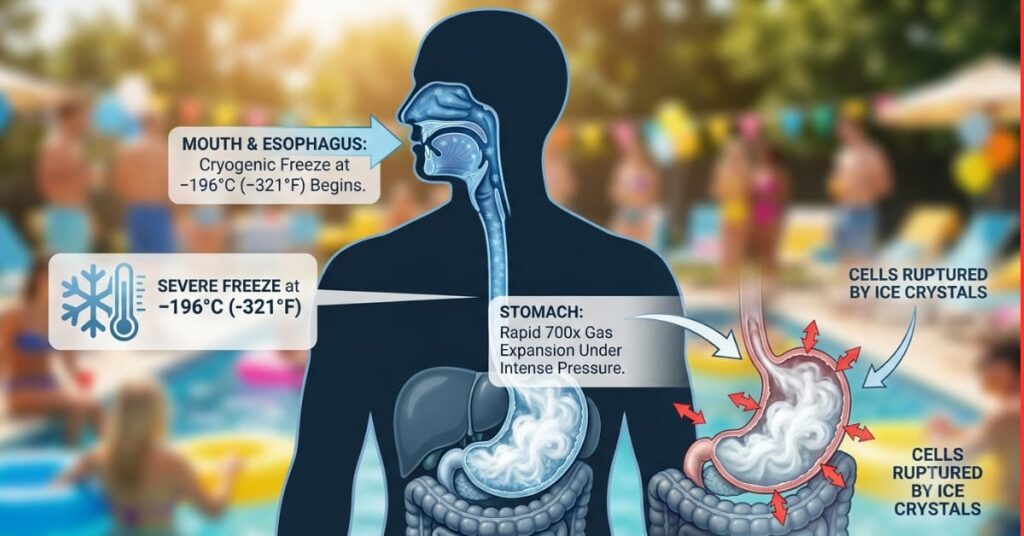
Right after swallowing that glass of liquid nitrogen, you might briefly think, “Wow, this is cold,” before your body has time to process what just happened. At −196°C (−321°F), your mouth takes the first hit.
As the liquid meets your body’s warmth, it instantly turns into gas, expanding nearly 700 times in volume. That sudden expansion stretches your stomach under intense pressure while the freezing liquid forms ice crystals that rupture cells and cut off circulation within seconds.
The damage resembles severe frostbite, except it happens almost instantly. In many ways, it is the opposite of what happens when boiling water burns your skin. Extreme heat and extreme cold destroy tissue differently, but both can leave devastating injuries. Your mouth, throat, and esophagus are suddenly exposed to conditions they were never meant to survive.
One Minute Later: The Burning Cold
Within the first minute, the freeze injury deepens. It may not feel like fire, yet the damage closely resembles a thermal burn, with swelling, tissue destruction, and escalating pain. Ironically, the growing numbness is not relief. It is a warning that your nerves are beginning to shut down.
Meanwhile, inside your abdomen, the expanding gas keeps building pressure. Your stomach stretches beyond its normal limits, triggering sharp pain, severe bloating, and waves of nausea. What began as a freezing injury in your mouth and throat is quickly becoming a life-threatening emergency.
Ten Minutes Later: Emergency Mode Activated

Ten minutes later, the party has all but stopped for you. Someone calls for an ambulance while others gather around, unsure whether you are choking, collapsing, or both.
Inside your body, the real emergency is already underway. Your immune system rushes in, triggering swelling and inflammation as frostbitten cells die, much like when your immune system turns against your own body. In severe cases, doctors may need to remove dead tissue to prevent further complications, a terrifying escalation from a single sip.
Meanwhile, the expanding gas continues stretching your stomach and intestines toward their limits, risking tears or perforations. Pain is no longer sharp or brief. It becomes overwhelming.
With every passing minute, the freezing damage spreads deeper. Any delay in treatment magnifies the harm, pushing your body closer to injuries that may never fully heal.
One Hour Later: The Aftermath
By the time you reach the hospital, the immediate crisis is far from over. Swelling in your mouth and throat can become so severe that every breath and swallow turns into a struggle. Pain still burns intensely, while damaged nerves leave behind numbness and distorted sensations.
Deeper inside, trapped gas continues straining your digestive system. Unlike the bloating that develops when gas cannot escape normally, this pressure builds so rapidly that it can trigger vomiting, violent cramps, internal bleeding, or even tear the stomach itself. Without immediate medical treatment, those injuries can quickly spiral into infection, shock, or other life-threatening complications.
One Day Later: Recovery or Consequences?

A day later, you’re still in the hospital. The immediate danger has passed, but recovery is only beginning. With proper treatment, damaged tissues can slowly heal. Even so, drinking liquid nitrogen can leave lasting scars, including esophageal strictures that make swallowing difficult long after the emergency is over.
This isn’t just theoretical. In 2018, a 13-year-old boy developed severe abdominal pain and breathing difficulty after eating a snack prepared with liquid nitrogen. Doctors discovered a four-centimeter tear in his stomach caused by the liquid rapidly expanding into gas and had to perform emergency surgery to save him.
The crisis may last only minutes, but the consequences can stay with you for years.
One Week Later: Psychological Impact

A week later, some of the swelling has faded, but the experience has not. A friend takes you to your favorite café and orders your usual iced coffee. You stare at the glass but cannot bring yourself to take a sip. Your brain remembers traumatic experiences with remarkable clarity, much like the lingering fear that follows intense panic experiences.
The drink that once felt refreshing now fills you with quiet anxiety. You catch yourself scanning menus, watching drinks more carefully, and hesitating before anything cold touches your lips. The shift is subtle but lasting, from “What if?” to “That already happened.”
Physical wounds can heal. The memory often stays much longer.
Why Would Anyone Drink Liquid Nitrogen?
Take a deep breath. You’re still at the party. The blue, smoky drink in your hand is just an ordinary cocktail, not liquid nitrogen.
So why would anyone ever drink it?
Sometimes it’s curiosity. Sometimes it’s social media. Sometimes it’s the thrill of trying something dangerous enough to impress the people around you.
But liquid nitrogen does not care about curiosity or performance. At −196°C, it follows physics, not trends. The moment it touches warm tissue, it freezes on contact and rapidly expands into gas.
Your body is the one that pays the price.
Reality Check: Physics Always Wins
One careless sip can become a lifetime of consequences.
Liquid nitrogen belongs in laboratories and controlled environments, not inside the human body. At −196°C, it freezes tissue on contact and rapidly expands into gas, turning curiosity into a medical emergency within seconds.
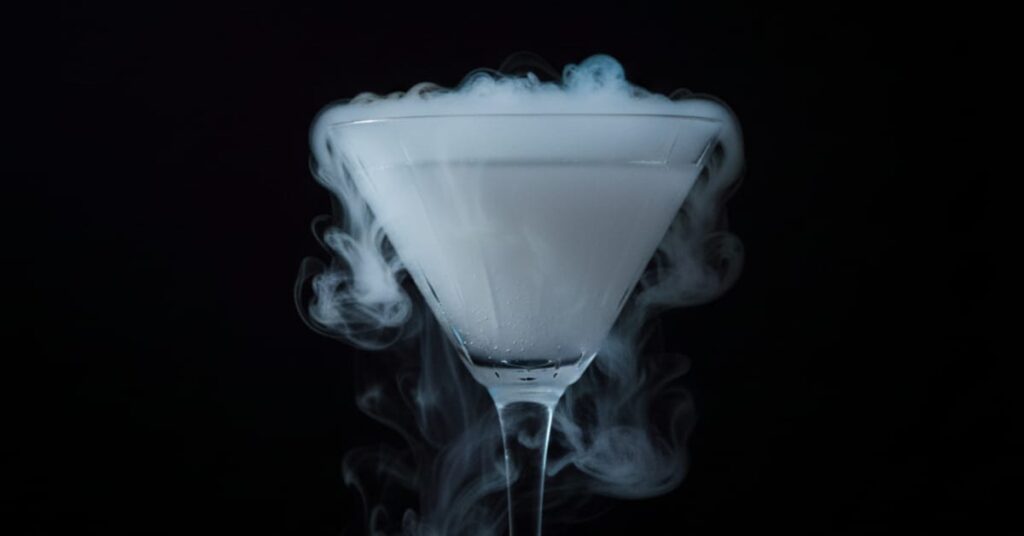
It may look like harmless fog, but it is simply physics doing exactly what physics does.
Curiosity asks questions; Physics gives answers.
Respect the cold.
Sources
The following sources were consulted while writing “What Happens If You Drink a Glass of Liquid Nitrogen?“
- Who What Why: How dangerous is liquid nitrogen?
https://www.bbc.com/news/magazine-19870668 - Stomach Perforation Caused by Ingesting Liquid Nitrogen: A Case Report on the Effect of a Dangerous Snack
https://pmc.ncbi.nlm.nih.gov/articles/PMC6078932/ - Gastric Perforation After Liquid Nitrogen Cocktail Ingestion: A Case Report
https://www.cureus.com/articles/363966-gastric-perforation-after-liquid-nitrogen-cocktail-ingestion-a-case-report#!/ - The images in this blog are created with the support of an AI tool and reviewed by the author.





Comments
this is testing comment
Hello
Testing
Testing in incognito