

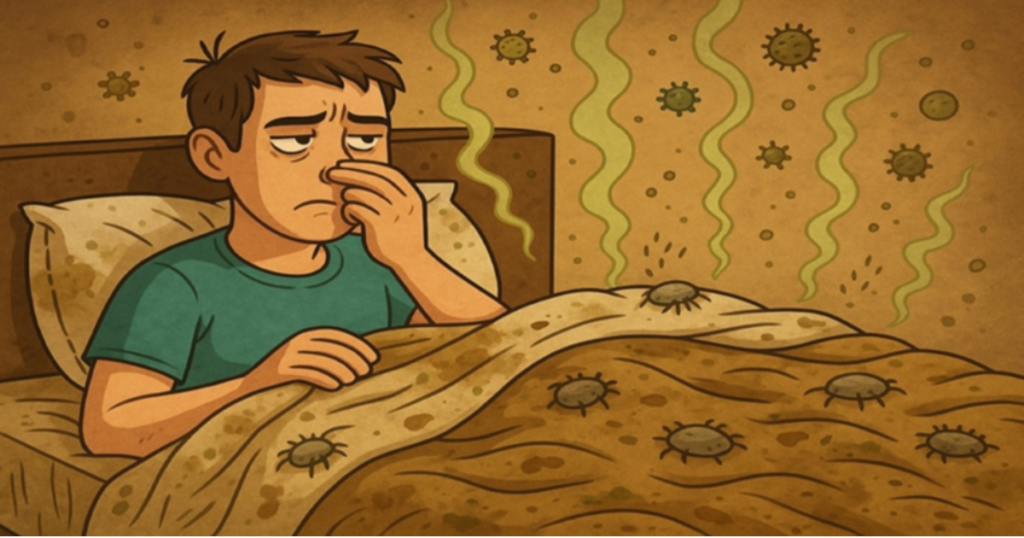
What happens if you never change or wash your bed sheets? Step into an ordinary bed where hidden buildup grows, night after night, without you noticing.
Saturday morning light slides across the wall, and you burrow deeper into the sheets for one more minute of sleep.
The cotton brushes your cheek, soft and familiar; then a faint smell slips into your breath, something you cannot quite place. You pull the blanket closer and breathe in again, catching it more clearly this time: not sharp, not alarming, just a bit off, the kind of smell that makes you wonder when you last washed these sheets, or whether you ever really have.
Washing bedsheets rarely feels urgent, so it slips between chores, pushed to tomorrow, then the day after, until the thought quietly outlasts the morning itself.
Your fingers trace a crease near the pillow, and the thought lingers longer than expected; it does not ruin your Saturday, but it changes how the mattress feels beneath you.
Even so, from across the room, everything still looks fine, which is exactly why it is easy to leave for another week. Yet you stay a moment longer, wondering what fine really means up close.
Week One: Skin Cells Pile Up
Nothing about the bed gives away what is happening underneath it: you climb in, wake up, and repeat the cycle without a second thought, the sheet cool against your skin just like every other night.
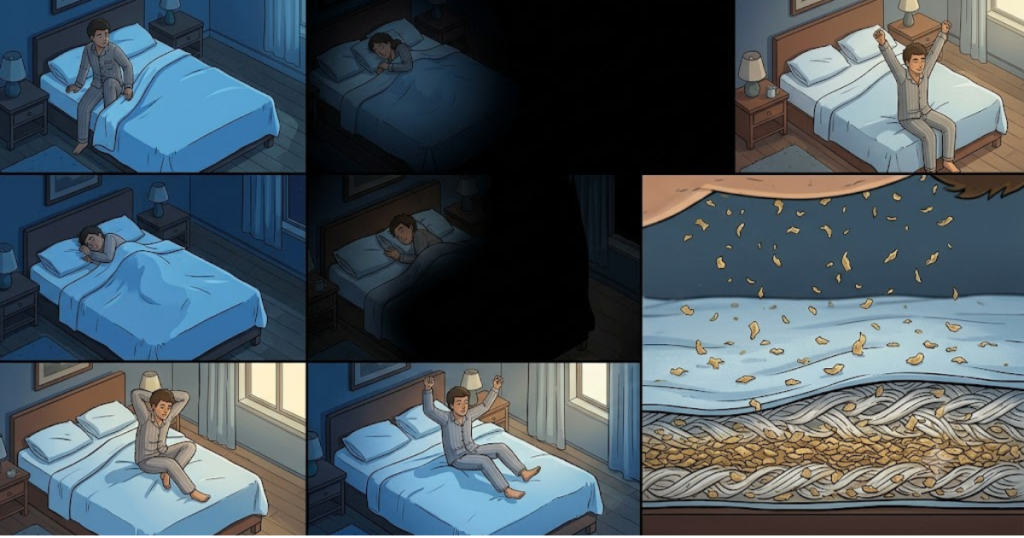
While you sleep, your body keeps doing something you never notice. Skin researchers have measured it with surprising precision: close to thirty to forty thousand skin cells lift off you every minute, settling into the fabric as invisible dust in a bed spotless to the eye.
Those flakes stay hidden for now, building toward the week ahead.
Week Two: The Pillow Warms
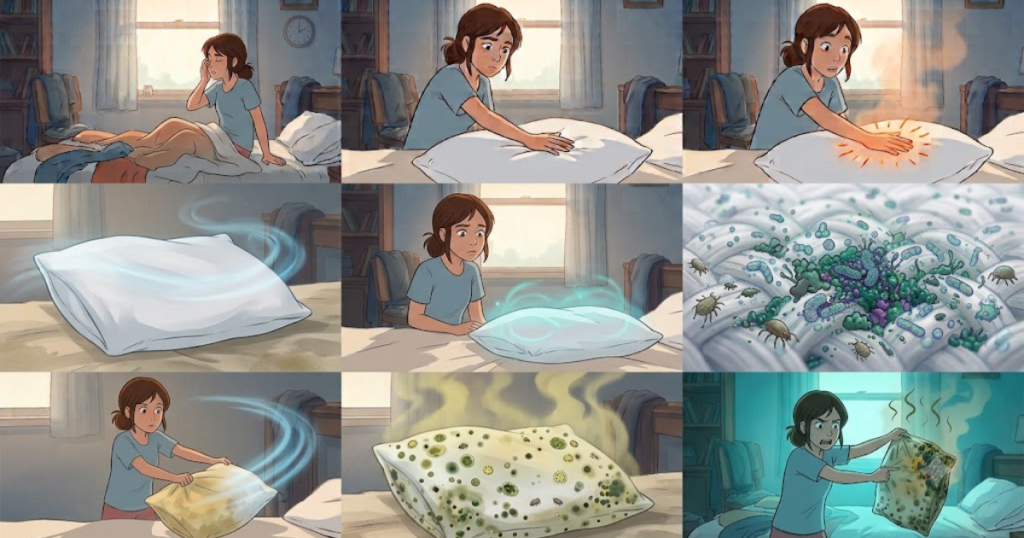
The buildup announces itself first through your pillow. You lie down one night and notice it holds onto warmth a little longer than it used to, the fabric still faintly heated from the night before.
Two weeks in, this extra warmth is not an imagination. Sweat and natural oils have been working their way into the fibres since the first night, and studies of pillow fabric confirm exactly what your palm already senses: moisture trapped against cotton is the one thing bacteria need most, so colonies spread through the fibres faster than a glance would suggest.
You flip the pillow over out of habit, the same small routine you have always followed; your body senses more than your mind has worked out.
Weeks Three and Four: Dust You Breathe
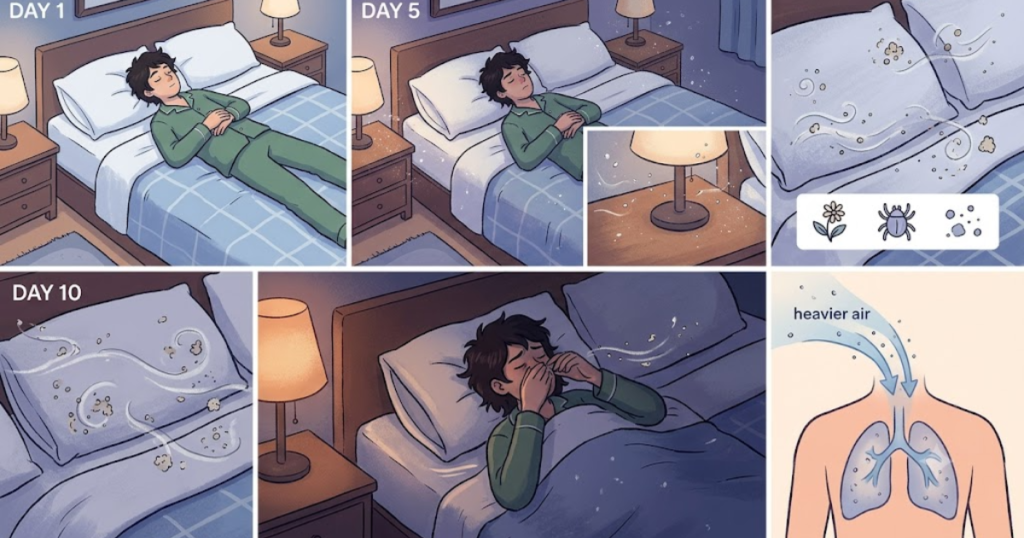
By the third week, the changes reach beyond what your skin alone can feel. Dust, pollen, and pet dander settle into bedding left too long between washes: a pattern the Asthma and Allergy Foundation of America has traced back to sheets and pillowcases people forget to wash.
You lie back one night, take a slow breath, and notice the air feels heavier than it should, thick with everything that has settled around you.
That heaviness follows you into sleep. Near two in the morning, you catch yourself rubbing your nose without fully waking, pulling the blanket higher in a habit that started before you noticed it had begun.
One Month: A Smell You Cannot Ignore
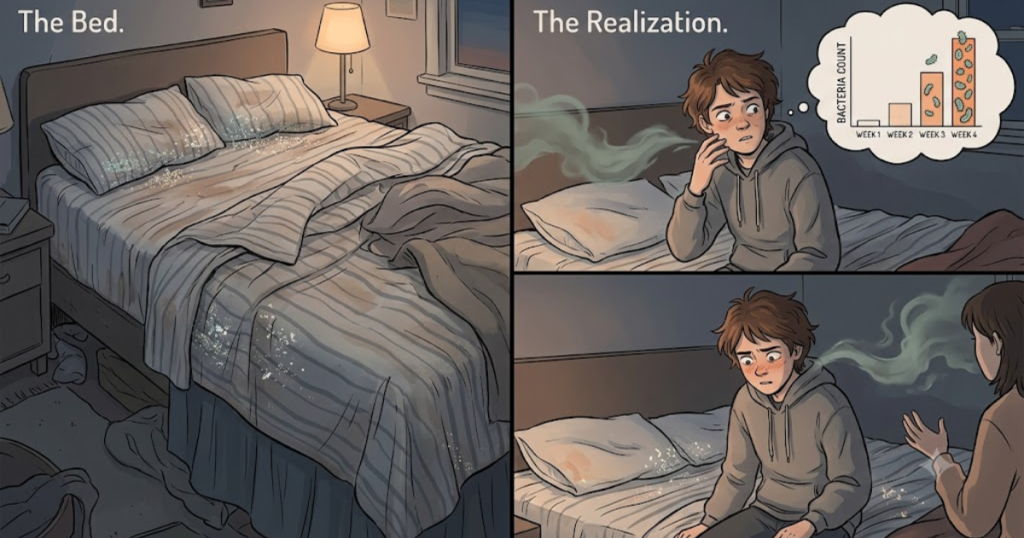
By the fourth week, that same habit follows you into full wakefulness: before lying back one night, the faint smell from weeks earlier returns, sharper, impossible to mistake for something drifting in from outside.
A month has passed, and you finally recognise it for what it is.
Bacteria need no dramatic entrance to take hold; fabric studies have traced millions of them across every square inch of linen left this long unwashed, building as quietly as the smell has, growing stronger with each week it goes unchanged.
That growth does not stay hidden for long: a friend perches on the edge of the mattress while you talk, and you find yourself hoping they will not notice what you have only just started to notice yourself.
Three Months: Skin and Sleep Suffer
Soon the effects reach beyond smell alone. A faint itch along your shoulder wakes you first, just enough to interrupt a stretch.
Three months in, the consequences have moved well past the surface: your chest feels subtly tighter at night than it used to, and a faint congestion lingers in your nose each morning, a pattern studies in the journal Allergy and Clinical Immunology link to prolonged exposure to allergens hiding inside unwashed bedding.
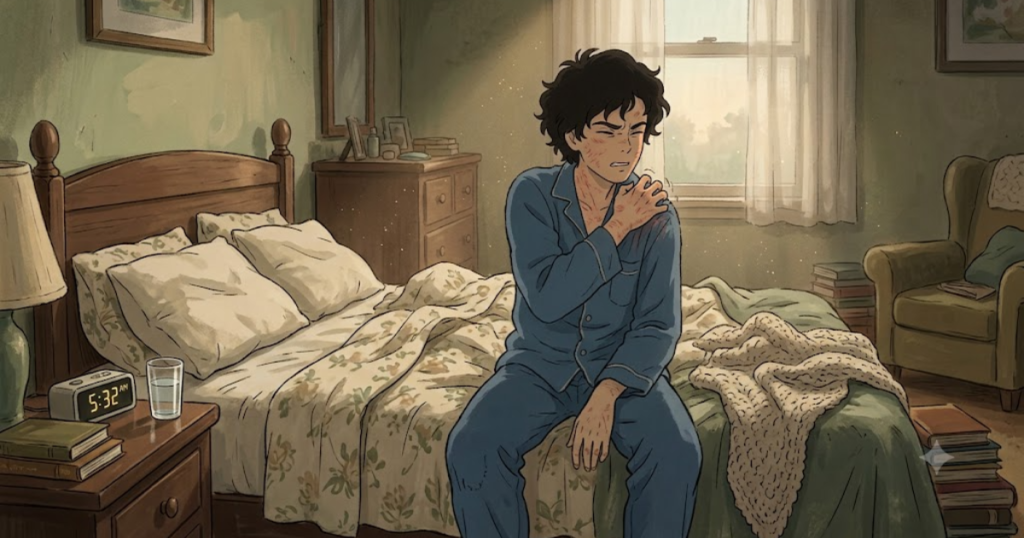
You could not say exactly when it began, for disrupted sleep and mild nasal irritation tend to build slowly and rarely get traced back to their source.
You lie awake longer than usual one night, aware of how little you have slept since the pattern began, and comfort no longer feels like the only thing your bed has been holding onto.
Six Months: A Living Mattress
By six months, the quiet realisation reaches beyond the sheets themselves. You run a palm along the mattress one evening and notice the surface staying warm a little longer than it should.
This lingering warmth is not holding heat alone; it is holding six months of everything you have never disturbed, layer resting on layer beneath a surface that looks untouched. Studies of aged, unwashed bedding out of the University of Manchester have traced a similar buildup to several species of fungus, including one called Aspergillus fumigatus, a name that means little until you picture it settled where your head rests every night.
None of it is visible, yet knowing it is there changes how the room feels around you.
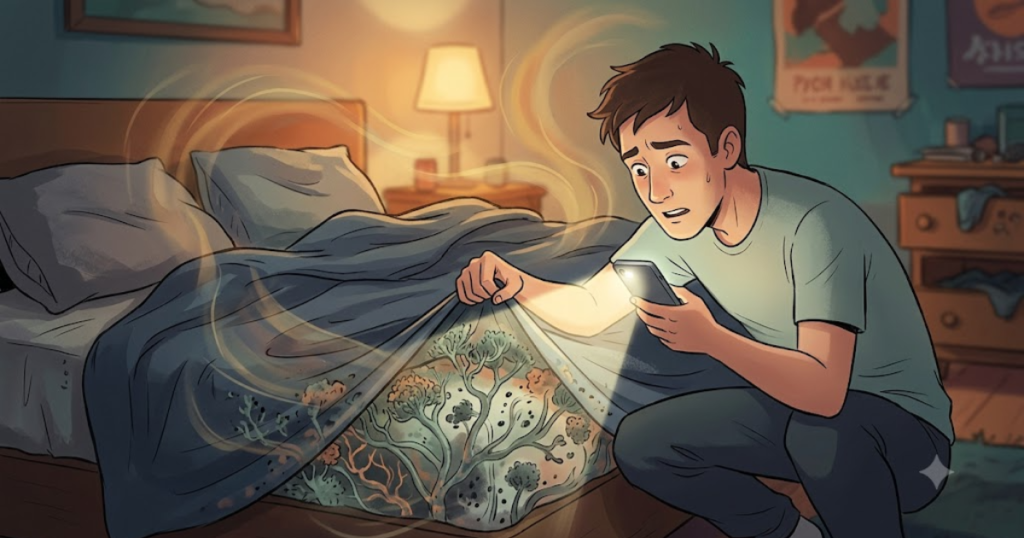
Under your phone’s flashlight, the corner of the sheet looks as it always has, and somehow that leaves the thought sitting even heavier in your mind than any visible stain could.
The Weekly Reset
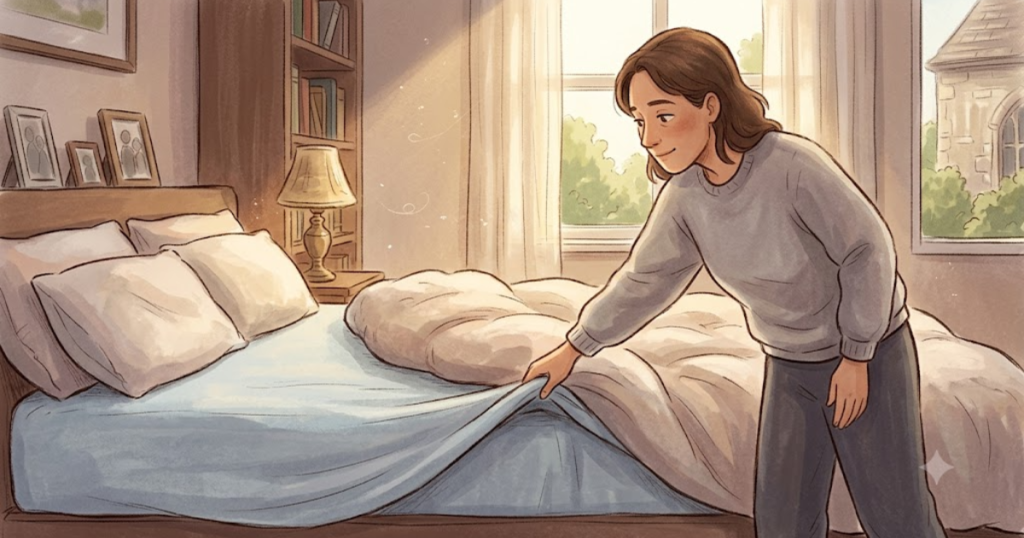
Eventually, the heavier thought is what gets you standing at the edge of the bed with the sheet in hand: the bed is still comfortable, yet it no longer feels entirely familiar, changed slowly enough that it never once demanded your attention while it happened.
Standing there, you remember a simple guideline: the Cleveland Clinic recommends washing sheets once a week, and once you understand what fills that week, the task stops feeling like a chore worth postponing; instead, it becomes a fresh start, a way of returning the mattress to what it was always meant to hold: you, and only you.
You pull the old sheet free and notice how ordinary the fabric looks in your hands, no different from the day you first put it on the bed. Comfort was never just about how soft it felt that first night.
It was always about what waits underneath, gathering quietly, for as long as you let it.
Sources
The following sources were consulted while writing “What Happens If You Never Change Or Wash Your Bed Sheets?”
- Indoor allergen exposure in relation to sleep health among US adults
https://pmc.ncbi.nlm.nih.gov/articles/PMC11978379/ - Pillows: a hot bed of fungal spores
https://www.sciencedaily.com/releases/2005/10/051015093046.htm - Poor sleep is highly associated with house dust mite allergic rhinitis in adults and children
https://pmc.ncbi.nlm.nih.gov/articles/PMC5558653/ - Fungal contamination of bedding
https://fungalinfectiontrust.org/wp-content/uploads/2021/05/Fungal-contamination-of-bedding.pdf - The images in this blog are created with the support of an AI tool and reviewed by the author.





Comments