

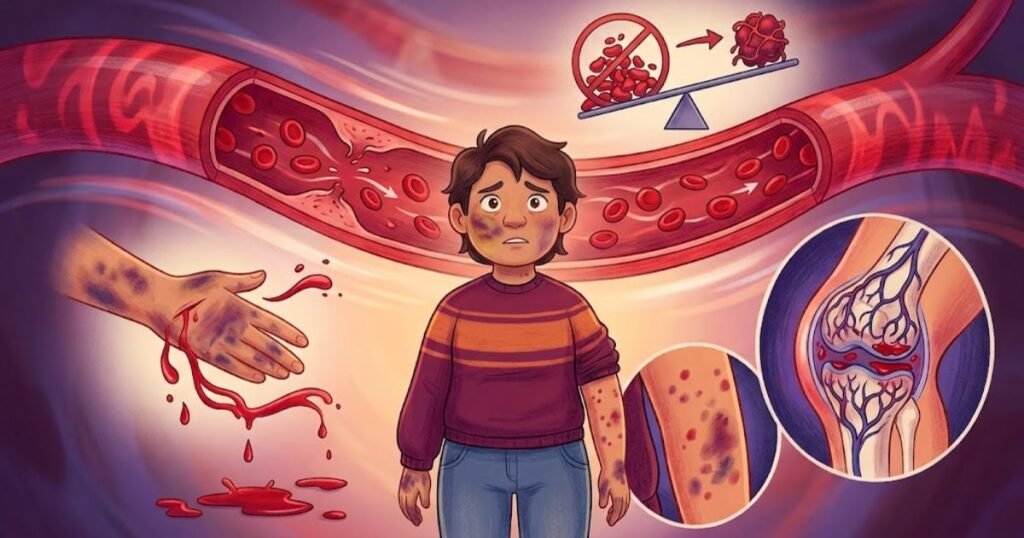
What happens if your blood never clots? Discover how bleeding wounds become life-threatening and survival becomes dependent on constant blood transfusions.
You are shaving on an ordinary morning when the razor slips.
A thin line of red appears on your chin. Barely noticeable, the kind of nick that stings for a second and then feels forgotten. You grab a tissue and press it to your skin, expecting the usual: a few seconds of red, then the stinging fades, and you move on with your day.
But the bleeding continues.
You hold the tissue there longer, pressing harder. The red soaks through. Your heart begins to beat faster. This sting is lingering far longer than it should. You rush to the bathroom sink and run cold water over the wound.
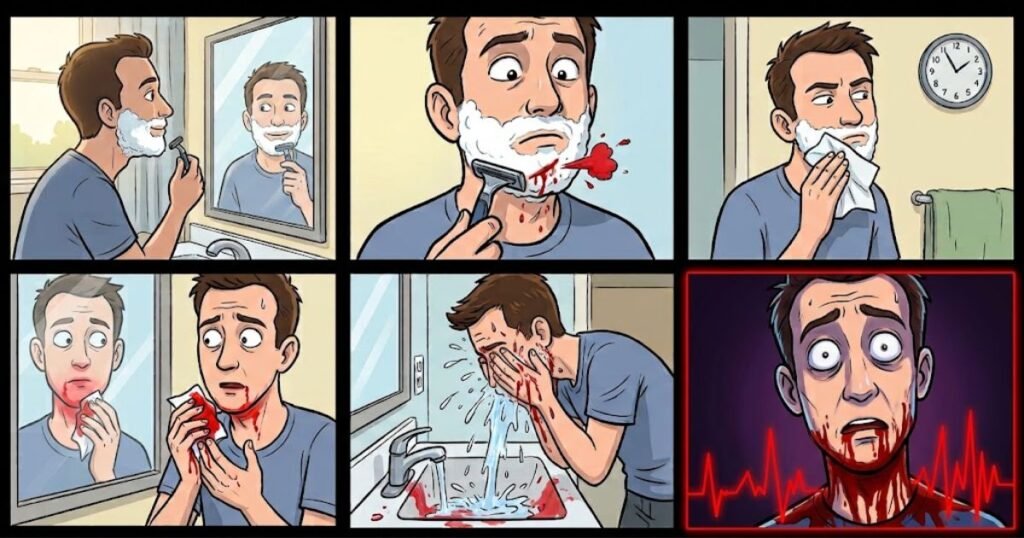
The flow refuses to slow. Your chest tightens with each heartbeat; your neck is slick with red.
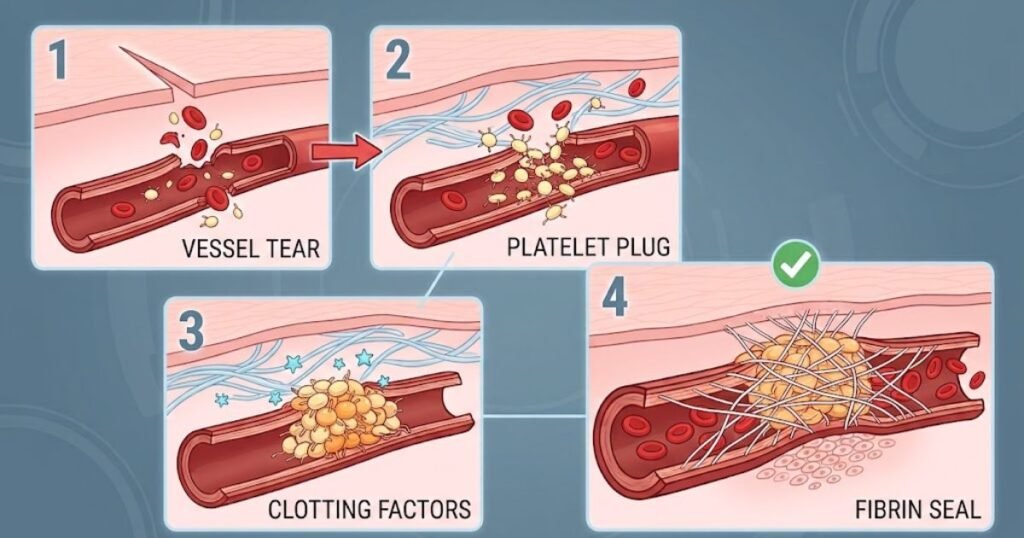
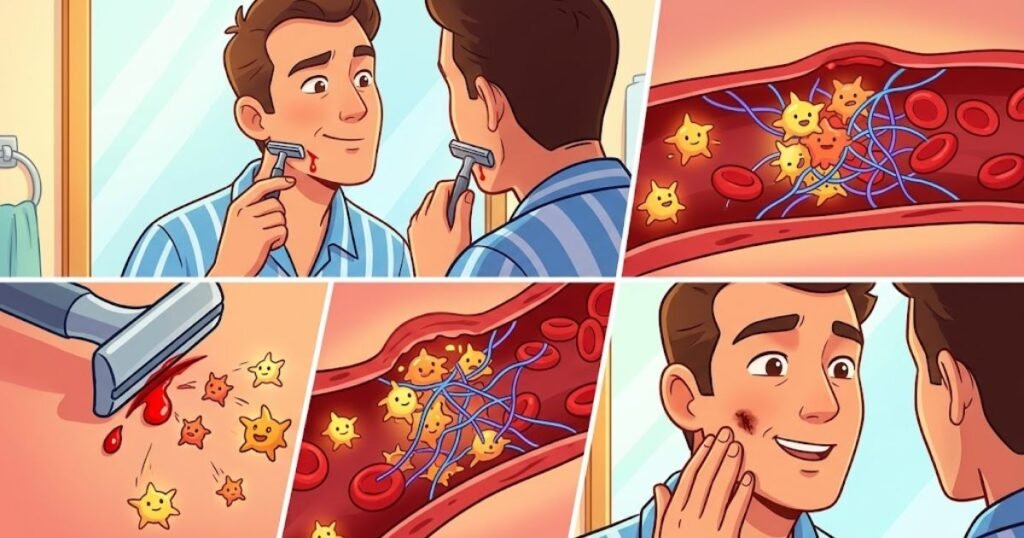
For a wound this small, the blood should have stopped by now. Your body does this automatically thousands of times throughout your life: platelets rush to any tear in a vessel and stick together, then proteins weave fibrin strands around them, creating a seal. NHLBI describes this as the body’s first line of defence against a damaged blood vessel. This happens in minutes, sometimes less.
Yet, today, this wound remains open because that entire system has simply stopped working.
Hour One: The Bleeding Continues
Fifteen minutes have passed. The flow shows no sign of slowing. Each moment stretches as you replace the tissue with a fresh one, and within seconds, blood begins to show through again. A thin trickle runs down your neck; you can taste copper at the corner of your mouth.
After forty minutes of constant pressure, the flow finally slows. This is not healing. The relentless pressure has finally reduced the flow, but the wound itself has not sealed. You press fresh gauze to the cut and hold it there. You stay in this bathroom for over an hour before feeling safe to release your grip.
One hour has passed, but the wound is still open.
Day One: Pattern Recognition
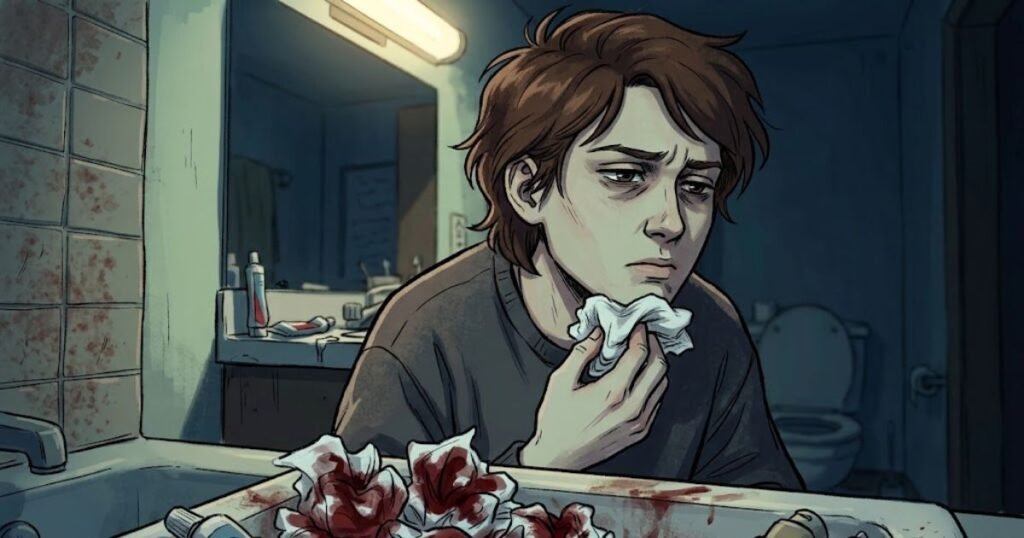
However, the bleeding stops by evening, only because you keep relentless pressure on it. You sleep fitfully, checking the wound through the night. By morning, the cut is still raw beneath a crust of dried blood.
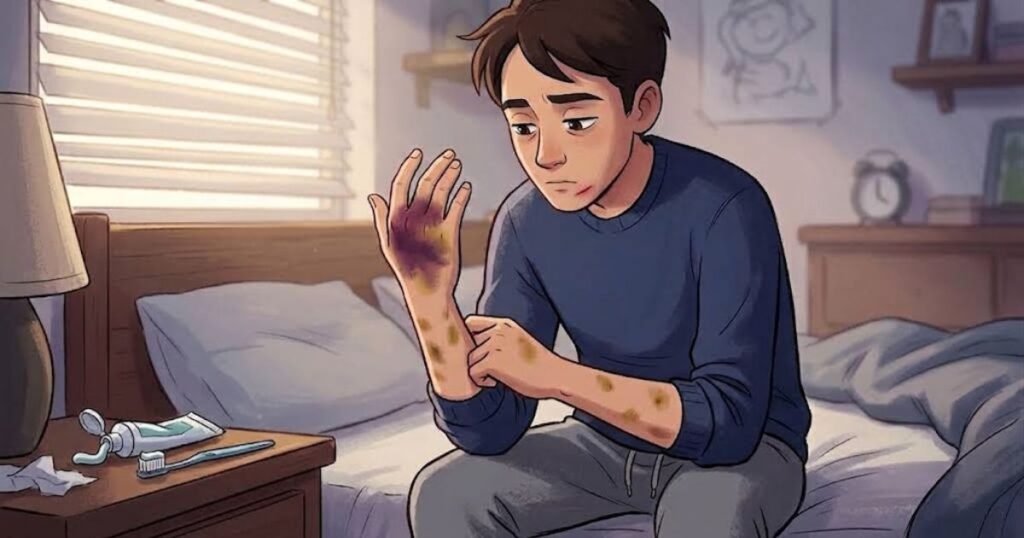
You notice something darker when you move your hand toward your face. Your one hand carries a large bruise, dark purple and tender. You do not remember hitting it. The realisation settles in slowly: you must have bumped it last week, gently enough to barely register, and the impact caused bleeding that has been growing beneath your skin ever since.
Your legs reveal faint discolouration from injuries you no longer remember getting. Your gums bleed when you brush your teeth: bright red blood pools in your mouth. Your nose bleeds unexpectedly while you are sitting at your desk.
You stop eating anything hard. Each small act of living now carries its own risk.
Week One: The Dangers Multiply
Pressure from your office chair leaves marks on the backs of your legs. A gentle bump against a doorframe creates a dark, painful patch on your hip. Even your own clothing creates marks; the elastic of your socks leaves impressions, and the collar of your shirt begins to leave traces on your skin.
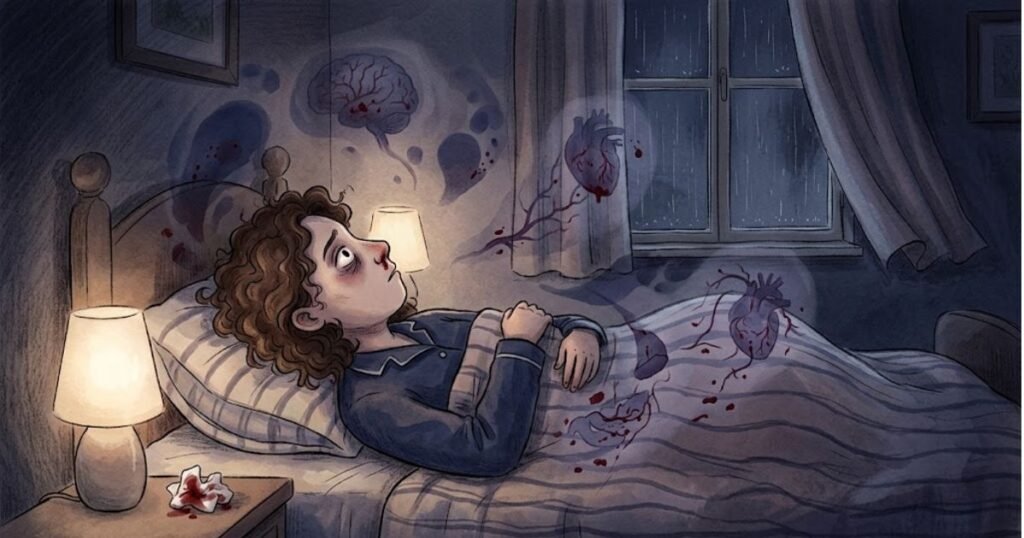
Your nose bleeds twice, with no explanation either time. The second one lasts thirty minutes. When it finally stops, exhaustion settles into your bones in a way that goes beyond physical tiredness; your body has lost blood again, this time for no injury you can identify or blame. You remember that unexplained bruising and difficult-to-stop bleeding can be signs of a serious bleeding disorder, as the CDC explains, and suddenly the bruises on your legs seem harder to dismiss.
That night, you lie awake wondering what is happening inside your body that you cannot see. You think about the blood vessels in your brain, your heart, your organs. If your nose is bleeding for no reason, what else is bleeding?
Week Two: Invisible Bleeding Begins
While thinking, you feel a dull ache in your lower abdomen, different from the bruising, a pressure that does not feel like a surface injury. Your urine turns dark; your stools become black and tarry. You schedule an appointment with a doctor, though the wait feels unbearable.
When you finally sit across from the doctor, they take blood tests and speak in careful tones. The results are clear: your blood simply will not clot, anywhere, ever. Your platelets and clotting factors are present, yet they refuse to function.
The doctor mentions transfusions; emergency room visits; and activities you can no longer do: no contact sports, no rough play, no falls of any kind.
You listen and nod, but part of your attention remains fixed on the pressure in your abdomen, the heaviness that suggests internal bleeding is continuing right now, in this moment, and there is nothing anyone can do to stop it.

Month One: Life Becomes Medical
By the end of the first month, you have already needed repeated blood transfusions.
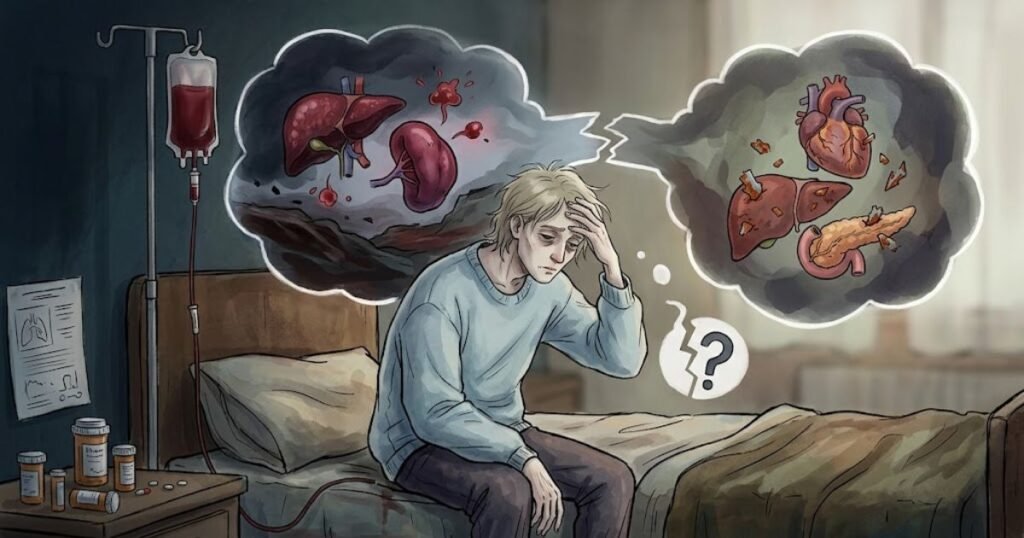
An ultrasound shows blood pooling in your abdomen. Your body is bleeding into itself, and without clotting, that blood simply accumulates, pressing against your organs, causing pain that resists medication. Walking becomes difficult; bruises cover your legs from the pressure of your own body weight. Your joints ache from bleeding into the joint spaces themselves, making even small movements painful. You stop going to work; even sitting at a desk becomes painful.
Your life has reorganised around a single reality: you can afford very few injuries.
A paper cut means an hour of bleeding. A minor fall means internal bleeding in places you cannot see. Friends ask if you want to meet for dinner; you decline. The thought of being vulnerable in a public place feels unbearable.
Month Two: Organ Damage Accumulates
After two months, weakness has become your baseline.
The repeated transfusions have left you pale. Walking across your house leaves you short of breath. Imaging shows blood collecting near your liver. Doctors discuss medications that might help, though they carry their own risks, while transfusions every few weeks have become part of your routine. They also warn about iron overload from repeated transfusions, which can damage organs in ways that differ from the bleeding itself.
Every treatment carries its own risks, but leaving the bleeding uncontrolled carries risks of its own.
Reality Check: Can You Survive This?
At this point, the question is no longer whether the bleeding is dangerous, but whether it can be controlled. Complete inability to clot is fatal without intervention like afibrinogenemia is a bleeding disorders in which clotting is severely impaired, not entirely absent, and it require constant medical management. Without effective treatment, severe bleeding can become life-threatening, particularly when it occurs in a vital organ or cannot be controlled.
Most people with severe bleeding disorders survive through modern medicine: transfusions, clotting factors, and careful avoidance of physical risk. Yet that survival comes with profound costs: financial, physical, and deeply personal. Life becomes hospital visits and medical management rather than something freely lived.
None of that story belongs to you, though. Your body was never asked to fight that battle.
Why Blood Clotting Matters
You are shaving again, but carefully now.
The razor touches your skin, and you feel the familiar slight sting of a nick. Within seconds, the bleeding slows. Within a minute, it stops completely. A tiny scab forms, dark and small, barely worth noticing.
This time, your platelets find the wound. Clotting factors weave their mesh, and your body seals itself without conscious effort.
The fact that this happens automatically, reliably, and thousands of times throughout your life is simply the reason you exist at all.
Sources
The following sources were consulted while writing “What Happens If Your Blood Never Clots Again?”
- Hemophilia
https://www.mayoclinic.org/diseases-conditions/hemophilia/symptoms-causes/syc-20373327 - What are bleeding disorders?
https://www.nhlbi.nih.gov/health-topics/bleeding-disorders - National bleeding disorders foundation
https://www.bleeding.org/ - Types of blood disorders
https://www.changinghaemophilia.com/global/en/learn-about-haemophilia/types-of-blood-disorders.html - What happened if your blood stopped clotting?
https://whathappenedif.com/what-happened-if-your-blood-stopped-clotting/ - The images in this blog are created with the support of an AI tool and reviewed by the author.





Comments