


What if glass suddenly became flexible? Discover how bending windows, failing vehicles, and disrupted technology could reshape buildings, transport, and society.
You are enjoying a quiet dinner at an elegant restaurant when your glass of juice slips from your hand. You reach for it, expecting a loud crash and dozens of eyes turning toward your table.
But the glass hits the floor, bounces, and rolls to a stop without breaking.
You quickly pick it up and squeeze its sides. They cave inward beneath your fingers, then slowly return to their original shape. You try again. The glass bends like rubber.
Around you, diners stare in disbelief. Some laugh, others excitedly test their glasses, and soon the entire restaurant buzzes with amazement. No one has to clean up broken glass or worry about sharp fragments.
Your hot soup sits untouched as you become caught up in the astonishing discovery.
But your phone soon fills with reports confirming that ordinary glass everywhere has suddenly become flexible. As you glance toward the restaurant’s enormous windows, you notice them bowing in the evening breeze.
Glass has not disappeared. It has lost something humanity has depended on for thousands of years: its ability to hold a rigid shape.
Everyday Glass Objects Begin to Bend

When you return home, you begin testing the glass around you. You press your palm against a window, and its surface gives way before slowly returning to shape. A faint cracking sound comes from the frame as the seal shifts.
You move through the rooms. The shower enclosure sways when you touch it, your mirror bends your reflection into a strange shape, and the glass dining table sags beneath objects it once held effortlessly. Even the glass shelves in your kitchen struggle to support their usual weight.
Then the weather turns. Strong winds sweep through the city, pushing against windows and glass facades. Some panels flex beyond their frames, loosening their connections and allowing rain to seep inside. A few detach completely, creating a danger for people below.
Buildings face an even greater threat if metals suddenly become soft like clay, weakening the rigid frames and supports that hold their structures together.
You look outside and realize the problem is much bigger than your apartment. Building managers contact engineers to assess the damage, while authorities begin restricting access to structures where loose glass panels pose an immediate danger.
The concrete foundations and structural supports remain intact, but buildings can no longer rely on glass to provide the protection they once did. A material you barely noticed before has become a serious problem for modern cities.
How Flexible Glass Disrupts Cars, Trains, and Aircraft
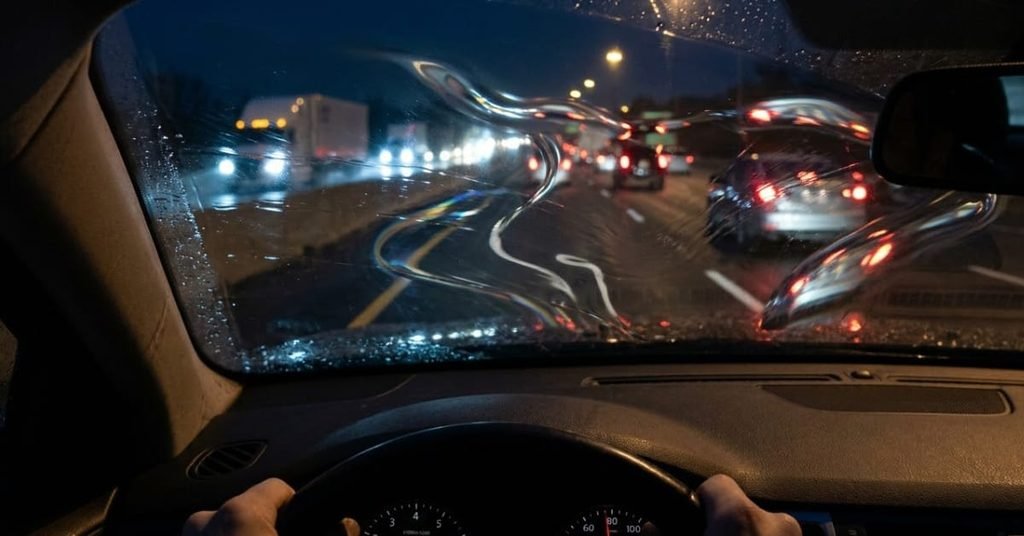
Curious to see how the strange transformation is affecting the city, you grab your car keys and head outside. As you drive down the street, you notice traffic moving unusually slowly.
Your own windshield begins to flex slightly under the pressure of the wind, distorting the road ahead. You grip the steering wheel and slow down, struggling to judge distances and spot obstacles clearly, while your pulse races with the same alarm response your body fires during a panic attack.
A windshield does more than provide visibility. Its precise shape helps maintain clear vision, while its strength contributes to the vehicle’s structural safety and supports proper airbag deployment in many models. If the glass bends unpredictably, these functions become unreliable.
You pull over as buses stop running and transport operators begin checking vehicles before allowing them back onto the roads. Trains face similar problems because their windows must remain securely fitted and clear enough for safe operation.
Aircraft use several types of transparent materials. Many passenger cabin windows are made from acrylic, while cockpit windshields and some other aircraft transparencies contain glass. Because these components help maintain cabin safety and visibility, any glass-based parts affected by the transformation require inspection before the aircraft can safely operate.
Watching traffic come to a standstill, you realize that modern transport depends on materials retaining predictable shapes under pressure. Until engineers determine which vehicles remain safe, journeys become slower, more expensive, and increasingly restricted.
How Flexible Glass Disrupts Modern Technology
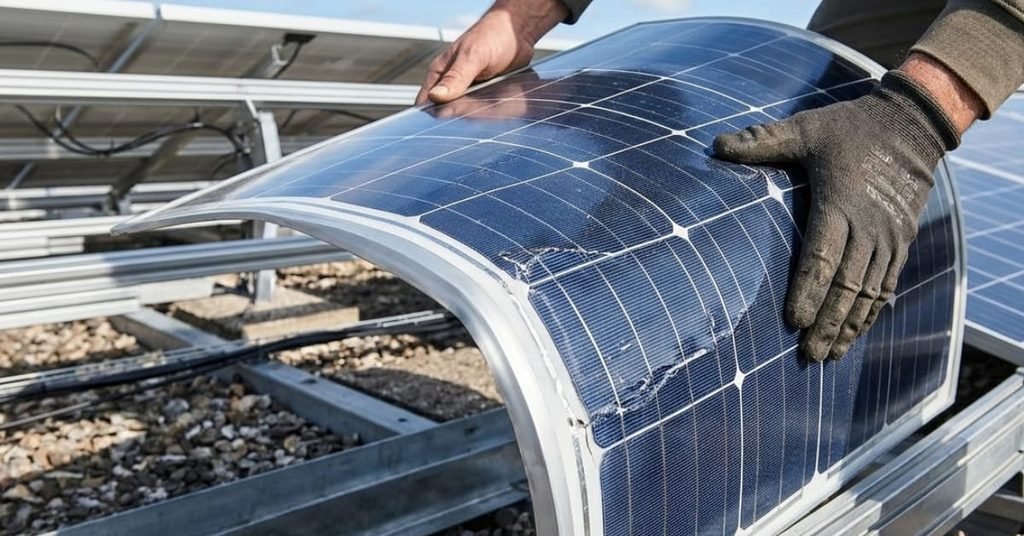
By the next morning, your phone is flooded with reports of factory shutdowns, damaged equipment, and reduced electricity production. One headline catches your attention: a solar power facility has suspended operations after technicians discover that its panels are deforming.
Solar panels rely on protective glass to shield delicate photovoltaic cells from moisture, dust, and physical damage. Excessive bending can stress the cells and electrical connections beneath it, damaging panels and reducing electricity production.
Scientific research faces another setback, and satellites that depend on precise optics face the same risk of going blind. Telescope lenses depend on precise shapes to focus incoming light. Even slight changes in their curvature can blur images and make astronomical observations unreliable.
Factories and hospitals face similar problems. Deformed glass components disrupt optical sensors, laboratory instruments, and medical devices that require precise readings.
You realize that glass is far more than a transparent material. Its ability to retain its shape keeps essential technologies working accurately.
What Materials Could Replace Ordinary Glass?
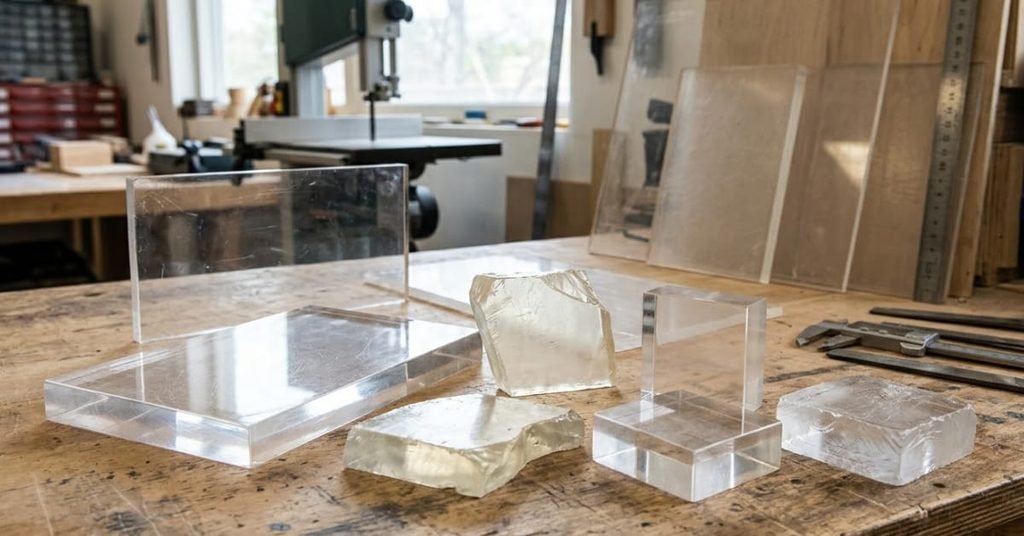
As the crisis spreads, engineers search for transparent materials that can retain their shape. Two alternatives quickly attract attention: polycarbonate and acrylic.
Polycarbonate is lightweight and highly impact-resistant, while acrylic offers good clarity and is easy to shape. Both already serve in applications such as protective glazing, displays, and safety shields.
However, neither replaces glass perfectly. Polycarbonate scratches more easily, while acrylic has limitations in heat resistance and impact performance. Aircraft windows, skyscraper facades, and smartphone screens each demand different properties.
You notice construction crews installing temporary protective panels around damaged buildings. Manufacturers begin testing alternatives for vehicles and electronic displays, but redesigning products and updating safety standards takes time.
The transition brings higher costs and material shortages, while accelerating research into advanced polymers and transparent composites.
How Humanity Adapts to a World of Flexible Glass
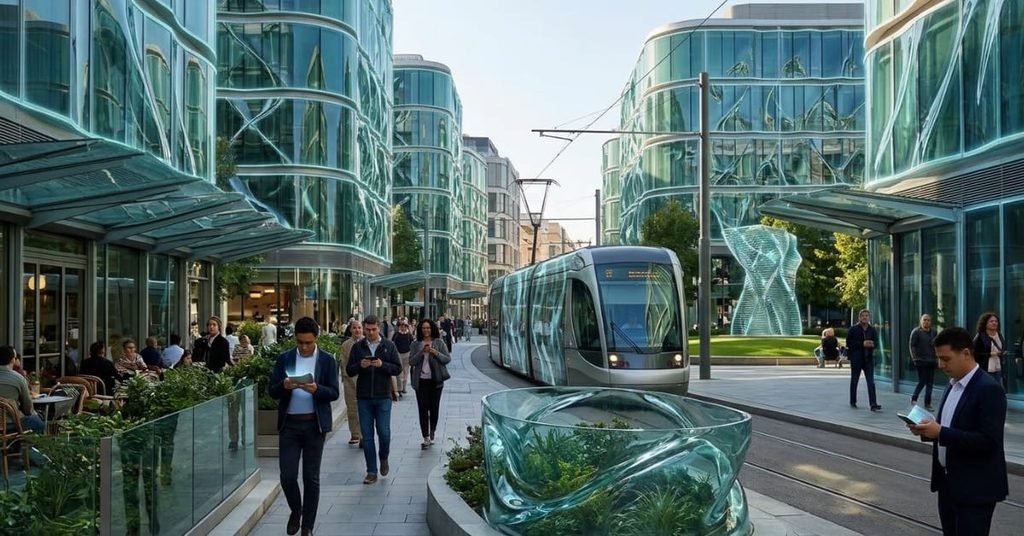
Years later, you walk through a city that has learned to live with flexible glass. Buildings rely on reinforced transparent panels, vehicles use redesigned glazing systems, and smartphones feature protective displays engineered to withstand deformation.
Yet flexible glass has not become useless. Its ability to bend proves valuable in specialized displays, curved surfaces, and compact electronic devices.
Engineers have learned an important lesson: flexibility is useful only when it is controlled. Humanity adapts, but the transformation permanently changes how transparent materials are designed and used.
Could Ordinary Glass Really Become Flexible?

Ordinary glass is brittle because microscopic flaws can develop into cracks under stress. These cracks spread through the material, causing it to fracture rather than bend significantly.
However, thin glass can flex more easily than thicker sheets. Specialized ultrathin glass already appears in advanced displays, while extremely fine glass fibers can bend without breaking as ordinary glass objects would.
For ordinary glass to become highly flexible, its mechanical properties would need to change dramatically. Although this scenario is hypothetical, ultrathin glass already demonstrates that glass can bend under specific conditions.
Back to Reality: The Glass Still Shatters

You blink and find yourself back at the restaurant. Your glass lies shattered on the floor, and waiters are already cleaning up the pieces. Your hot soup has gone cold while you sit there, lost in thought.
For a moment, you imagine a world where glass bends instead of breaking. It seemed like a safer world at first, but your imagination takes you much further. You realize that a material does not need to shatter to become dangerous. Sometimes, the real problem begins when something you depend on can no longer hold its shape.
You pick up your spoon, smile at your strange train of thought, and finally return to your dinner.
Sources
The following sources were consulted while writing “What If Glass Suddenly Became Flexible?”
- Flexible Glass: Myth and Photonic Technology
https://pmc.ncbi.nlm.nih.gov/articles/PMC12072811/ - Why some glasses break suddenly while others deform smoothly
https://phys.org/news/2026-07-glasses-suddenly-deform-smoothly.html - How ‘Flexible Glass’ Could Change Everything About Technology
https://time.com/4282322/flexible-glass/ - The images in this blog are created with the support of an AI tool and reviewed by the author.





Comments